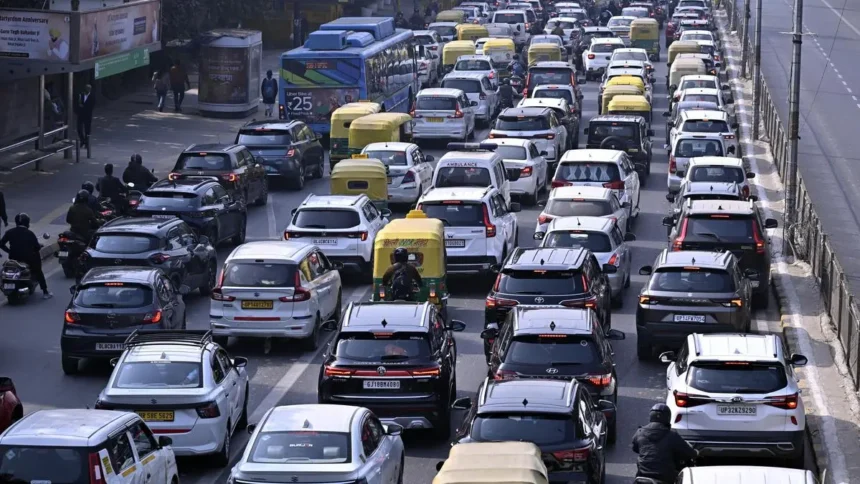
The proposed Bharat Stage VII (BS VII) emission standards could cost automakers an estimated ₹50,000-75,000 crore through FY32, forcing expensive upgrades to engines, exhaust-treatment systems and electronics while putting affordable cars, diesel SUVs and heavy trucks under pressure.
The transition forms part of a wider regulatory overhaul involving CAFE-III fuel-efficiency standards, E20 fuel compatibility, onboard diagnostics and Tractor Emission (TREM) norms. Preliminary industry estimates place the combined compliance burden at ₹0.85-1.25 lakh crore through FY32, although the calculations remain unverified and may include overlapping investments.
BS VII alone could add ₹15,000–75,000 to PV manufacturing costs and ₹1.4–2.6 lakh to heavy trucks, while creating opportunities for component suppliers. Electric vehicles face separate battery-durability and monitoring requirements.
Two- and three-wheelers could need upgraded catalysts, oxygen sensors and electronic controls, adding ₹4,000-12,000 and ₹12,000-18,000, respectively. Their specific BS VII requirements remain unconfirmed.
Small petrol and CNG cars may require improved catalysts, sensors and diagnostics, costing ₹15,000-22,000. Midsize petrol SUVs could incur ₹22,000-32,000, while strong hybrids may need ₹18,000-28,000 for enhanced exhaust treatment and calibration.
Compact diesel SUVs could require selective catalytic reduction (SCR) upgrades, particulate filters and urea-dosing systems, adding ₹35,000-48,000, rising to ₹45,000-75,000 for larger diesel SUVs.
Small goods vehicles and pickups could incur ₹25,000-35,000, light trucks ₹45,000-65,000, medium trucks ₹75,000 to ₹1.1 lakh and heavy trucks ₹1.4-2.6 lakh for advanced SCR systems, filtration, sensors and durability upgrades.
Electric cars and plug-in hybrids could need improved battery-management systems, thermal controls and durability testing to retain at least 75 per cent battery energy after five years or 1 lakh km and 67 per cent after eight years or 1.6 lakh km. No reliable incremental EV compliance cost estimate is available. All quoted vehicle costs are preliminary manufacturing estimates, not confirmed showroom increases.
The proposed regulations apply to passenger cars from April 2029, N1 goods vehicles from April 2030 and medium and heavy trucks and buses from April 2031, without separate grace periods for existing models.
For N1 vehicles, real-road nitrogen-oxide and particle emissions must meet laboratory limits without additional tolerance. Principal compliance extends to eight years or 1.6 lakh km, followed by additional requirements through 10 years or 2 lakh km.
For the heaviest trucks and buses, compliance extends to 12 years or 7 lakh km, followed by additional requirements through 15 years or 8.75 lakh km. New limits cover methane, nitrous oxide and ammonia, while over-the-air monitoring-data availability begins in 2033.
Bosch, Tenneco and Cummins Emission Solutions could gain from demand for catalysts, sensors and exhaust-treatment systems. Battery-management and electronics suppliers could benefit from EV durability requirements.
Randheer Singh, Founder and CEO of ForeSee Advisors, said: “Tighter regulations offer localisation opportunities, although manufacturers must balance technology spending against affordability”.
Brake requirements from 2032 could benefit Brakes India, while tyre provisions could create opportunities for Apollo Tyres and CEAT.
A senior R&D executive at a leading passenger vehicle manufacturer told businessline that “overlapping BS VII, E20, CAFE-III, onboard diagnostics and tractor emission requirements would strain engineering resources, testing facilities and investment budgets.”
The challenge, the executive indicated, is meeting successive deadlines without allowing cumulative compliance costs to undermine vehicle affordability..
Published on October 15, 2026