



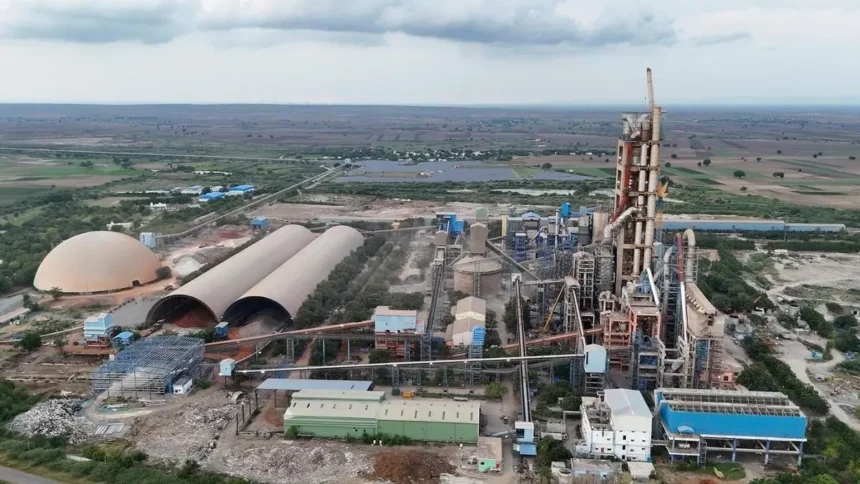
Cement companies’ profits are expected to come under pressure in the September quarter owing to high costs and lower realisation. That said, weak demand prevented leading companies from passing on the higher cost to consumers.
The slowdown in construction activities and real estate projects due to the South-West monsoon in major markets also impacted cement demand.
Cement companies’ profitability will remain under pressure in the September quarter due to elevated fuel, power and freight costs, coupled with limited pricing pass-through, said Vincent KA, Senior Research Analyst, Geojit Investments.
But the outlook for the December quarter, he said, appears relatively favourable, with demand expected to recover, supported by a resumption in construction activity, and recovery in real estate launches towards the end of the September quarter. This, even as power and fuel expenses are expected to remain elevated amid the volatility in global energy markets.
Cement sales volume should grow 7-8 per cent, but Rajesh Singla, CEO and Fund Manager, Alpha AMC. But margins are squeezed with the EBITDA expected to fall by about 15 per cent y-o-y as prices were flat while cost increased by ₹80-150 per tonne.
Power and fuel costs, which make up half the operating cost, may stay elevated at current levels, while margins will improve if West Asia tensions ease, he added.
Ashutosh Murarka, Cement Analyst, Choice Institutional Equities, said the demand will improve gradually post-monsoon, but it may remain uneven given slower real estate activity and delays in few construction projects. “Infrastructure-led demand should remain relatively supportive, but a sharp volume acceleration looks unlikely in the near term. We therefore remain watchful on pricing discipline, especially with incremental capacity coming on stream.”
Monjit Gogoi, Founder, AlphaVERSE, said the bigger issue in the sector was the recovery in volumes without much pricing power in the hands of cement companies. With elevated power, fuel and freight cost, cement makers may try to raise prices, but passing on the entire increase could be difficult in a soft market, he added.
“The Q3 performance depends on how much cost increase cement companies can pass on rather than how much they can sell. Companies with captive power, efficient plants and strong regional pricing should perform better,” he added.
Published on October 6, 2026