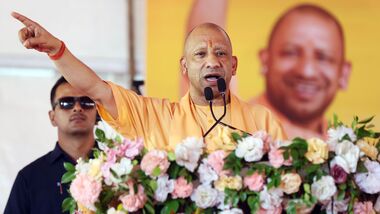
The -led government has tightened character verification rules for government job applicants, making individuals associated with organisations seeking to change the existing social order through violence ineligible for recruitment.
The revised guidelines state that a person will be considered ineligible if they are a member of ‘any organisation whose resolved object is to alter the existing order of society by violent means’.
The move is learnt to have been prompted by youth protests across several states, particularly those led by the (CJP), The Print reported.
The revised guidelines were issued on Wednesday by Principal Secretary (Appointment & Personnel) M. Devaraj.
Under the new policy, participation in ‘any such activity’ after attaining the age of 21 and within three years from the date of inquiry will be treated as evidence that the individual remains actively involved in ‘such activities’. This presumption will apply unless there is concrete evidence of a ‘change in attitude’ during that period.
However, the policy clarifies that no person will be considered unfit for government appointment merely because of their political views.
In a press statement on Thursday, the Uttar Pradesh government defended the revised guidelines, saying the new system would eliminate the need for candidates to wait for character verification reports before joining government service.
According to the government, a unified policy for character and antecedent verification will simplify recruitment and ensure appointments are made on time.
Under the revised procedure, selected candidates can receive provisional appointment letters even while police verification is underway. Their appointments will be confirmed once the verification report is found satisfactory.
However, detailed verification will remain mandatory before appointments to sensitive and security-related positions.
The government has directed the police and concerned officials to submit verification reports within 30 days. The move is expected to reduce delays in recruitment and spare candidates repeated visits to police stations and government offices, the statement said.
The 21-page guidelines, released on Wednesday, also clarify that merely having an FIR registered against a candidate or a pending investigation will not automatically disqualify them, The Print reported.
The revised policy will apply to direct recruitment across government departments, corporations, councils, educational institutions, autonomous bodies, public sector undertakings, panchayats and local bodies. Recruitment cases already pending will also be processed under the new guidelines.
Under the prescribed procedure, the appointing authority will forward the candidate’s details to the Director General of Police (Intelligence), the district magistrate of the candidate’s home district and district magistrates of places where the applicant has lived for more than a year during the preceding five years.
District magistrates will obtain reports from the respective district police chiefs before forwarding their findings to the appointing authority.
For routine cases, police and local intelligence units will conduct verification using their existing records. Candidates will not be required to appear physically, undergo questioning or submit additional documents.
However, field verification may be ordered in specific cases at the direction of the appointing authority.
If a police verification report is adverse, the district magistrate will give the candidate an opportunity to present their case before a decision is taken.
For candidates who have lived in another state for the prescribed period, the police chief of the concerned state or Union Territory may also be consulted.
The revised guidelines require applicants to declare in their application forms and self-declaration affidavits whether they have ever been arrested, prosecuted or convicted by a court of law.
Candidates must also disclose details of any dismissal from previous government service and any ban imposed by a recruitment commission or board for using unfair means.
Concealment of information could lead to the cancellation of an appointment. However, a candidature will not be cancelled solely because an applicant failed to mention an arrest or criminal case in the application form if they subsequently disclose it in writing during a medical examination, certification, verification or through a self-declaration form.
The guidelines also state that existing government employees will not be required to undergo character verification again. However, information may be sought from their previous departments if necessary.
Under the revised policy, candidates against whom charges have been framed in cases involving murder, rioting, sedition, kidnapping for ransom, rape, dowry death and offences under the POCSO Act will be ineligible for government jobs. Those convicted in such cases will also be barred.
Individuals involved in examination-related malpractice will also be disqualified. This includes operating cheating rackets, leaking question papers, running solver gangs, impersonating candidates and obtaining fake certificates.
The policy also brings cybercrimes within its ambit, including digital arrest fraud and scams conducted through digital payment platforms.
Candidates facing cases under the Prevention of Corruption Act, Prevention of Money Laundering Act, or Uttar Pradesh Gangsters and Anti-Spatial Activities (Prevention) Act will also be considered ineligible under the revised policy.