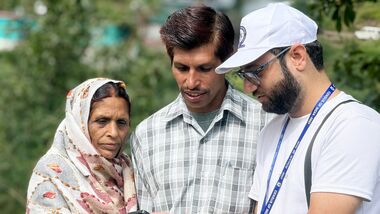
The (MHA) has notified the schedule for the second phase of , with the house-to-house population enumeration set to begin on January 25, 2027, and continue until February 28, 2027. A revisional round will subsequently be conducted from March 1 to March 5, 2027.
According to the notification issued on Friday, October 30, the exercise will be conducted across most states and Union Territories, with certain regions excluded from the January-February schedule.
These include (until further declaration), Goa, Uttar Pradesh, Punjab, Uttarakhand, the Union Territory of Ladakh, and snow-bound non-synchronous areas of Himachal Pradesh and Jammu and Kashmir.
The ministry has also provided an option for self-enumeration from January 10 to January 24, 2027, ahead of the commencement of the house-to-house population count.
The reference date for the census has been fixed at 00:00 hours on March 1, 2027.
“In exercise of the powers conferred by section 3 of the Census Act, 1948 (37 of 1948) read with rules 6A and 6D of the Census Rules, 1990, the Central Government hereby declares that in all States and Union territories of India except the State of Manipur (till further declaration), the States of , Uttar Pradesh, Punjab, Uttarakhand, the Union territory of Ladakh and the snow-bound non-synchronous areas of the State of Himachal Pradesk and the Union territory of Jammu and Kashmir the conduct of census of the population shall be undertaken from the 25th January, 2027 to the 28th February, 2027 with a revisional round from the 1st March., 2027 to the 5th March, 2027.”
“For the conduct of the said census, there shall be an option for self-enumeration from the 10th January, 2027 to the 24th January, 2027, just before the start of the house-to-house population enumeration. The reference date for the said census shall be 00:00 hours of the 1st day of March, 2027,” reads the notification.
Census 2027 is being conducted in two phases, beginning with the House Listing and Housing Census, followed by Population Enumeration.
The first phase, which began in April 2026, focuses on collecting information about housing conditions, household amenities and assets. The second phase will capture individual-level demographic, social and economic information from households across the country.
The Population Enumeration phase will cover details such as age, marital status, religion, caste, education, employment, migration and disability, among other demographic parameters. A questionnaire for the second phase has been notified by the Office of the Registrar General and Census Commissioner of India.
One of the major features of Census 2027 is comprehensive caste enumeration, making it the first census since Independence to collect caste details across communities.
Until the 2011 Census, systematic caste enumeration covered Scheduled Castes (SCs) and Scheduled Tribes (STs). The decision to include comprehensive caste enumeration in the upcoming exercise was taken by the Cabinet Committee on Political Affairs on April 30, 2025.
The move is expected to provide more detailed demographic data on caste groups across the country.
Census 2027 will be India’s first digital census, with data collection being carried out through mobile applications and digital tools.
The government has introduced an optional self-enumeration facility, allowing households to submit their information online before enumerators undertake physical visits. Once the online submission is completed, a unique Self-Enumeration ID will be generated, which can be shared with the enumerator for verification.
The self-enumeration portal will be available in 16 languages, including Hindi and English. The information submitted online will be confirmed and integrated by enumerators during their field visits.
The Union government has approved an outlay of ₹11,718.24 crore for Census 2027.
The exercise will cover 36 states and Union Territories, 7,092 sub-districts, 5,128 statutory towns, 4,580 census towns and approximately 6.39 lakh villages.
The census is one of India’s largest administrative and statistical exercises, providing demographic and socio-economic information used for policymaking, resource allocation and planning across sectors.
(With inputs from ANI)