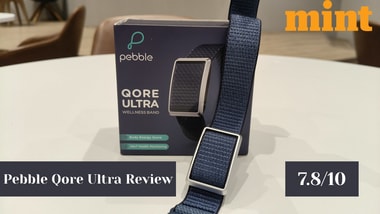
The Pebble Qore Ultra takes a different approach to wearable technology. Instead of adding another display to your wrist, the company has focused on continuous health monitoring, sleep tracking and AI-powered wellness insights. It is a screen-free wellness band launched on September 29, 2026. It takes a more focused approach to recovery metrics (HRV, sleep, readiness) than notifications, watch faces, or an always-on display, making it a more approachable option than Whoop and the Fitbit Air.
At an introductory price of ₹5,999 (MRP ₹8,999) and available without any recurring subscription for its AI insights and scores, it is much cheaper than the competition and promises good battery life and a focused set of sensors.
The data is only stored in the companion Qore (or Halo) app. Keeping this to a minimum, this device weighs around 24 g and is connected to a nylon strap, which is intended for all-day and overnight use. The shape is compact and rectangular, with Forest Black, Coastal Blue and Desert Gold colours.
Without the screen, there is no distraction from the bulk, which is great for sleep tracking and recovery focus. It is rated 3 ATM (which is good for everyday water exposure and light activity, but not as strong as some previous Pebble bands which had a 5 ATM rating). Magnetic charging takes about two hours. Initial impressions indicate that it is comfortable in the long term, but the durability and fit consistency of the straps will require field testing of previous Qore models (these models occasionally drew notes on this).
Hardware is based on a precision optical sensor array of 4 photodiodes (4-PD) and a 6-axis motion sensor. It supports continuous 24/7 monitoring of:
It also has built-in activity recognition for a number of activities (such as walking, running) and over 100 sports modes. GPS mapping, pace, distance and detailed route data are dependent upon the connection of the smartphone and not the GPS in the vehicle. These are wellness metrics, not medical-grade readings. does not claim independent clinical validation for the sensors or derived scores.
The companion app is the real interface. It consolidates data into simplified scores:
Other features include family ranking/group sharing with selected metrics and challenges. Smart notifications (calls, sedentary alerts, hydration reminders) are available, but deliberately not used due to the lack of a screen. The focus is on giving people meaningful advice, not a lot of raw data. Unlike some premium Fitbit devices and (which has a membership fee), you don’t need to pay for a subscription to receive the basic AI information and scores.
Pebble offers a 150 mAh battery, which is said to provide up to 15 days of battery life. It takes a long time to fully charge. A long battery life is useful since they need to be worn consistently for meaningful recovery and trend data. As a screenless device, I expect it should last longer.
The Pebble Qore Ultra is certainly one of the most intriguing budget devices in the screenless wellness genre. It provides the basic idea behind devices such as Whoop: ongoing, passive measurement made actionable for readiness and recovery information, at a lower price point, and without subscription restrictions. The genuine differentiators in the Indian market are the 4-PD sensor upgrade, 15-day battery claim, and no-subscription AI scores.
In its own terms, a recovery band that is easy to use and has a specific purpose is a good recommendation for the right user.
Score: 7.8/10
It is available online from Pebble’s website (pebblecart.com), Amazon, Flipkart and retail stores in India. As with all consumer wearables, use the information as a guideline for wellness, not a medical diagnosis.