India’s big-ticket electric vehicle subsidies have an expiry date: 31 March 2028. And at least two auto giants, Bajaj Auto Ltd and Tata Motors Ltd, have begun preparing for life after it.
The preparation comes as analysts and investors begin to question the readiness of companies to deal with the withdrawal of incentives in less than 18 months as EV profitability is supported by taxpayer-backed schemes now.
Senior executives at both companies, which are among the beneficiaries of the government’s production-linked incentive (PLI) scheme and, have indicated that reducing manufacturing costs will be key to profitability once the incentives are reduced. The withdrawal of government support in the US and China had led to a decline in EV sales in those countries, prompting a closer look at whether the trend could be repeated in India.
EV sales have surged in the country, with two-wheelers crossing the 10% mark and cars exceeding 8% of vehicle sales.
Bajaj Auto’s chief financial officer Dinesh Thapar said the PLI scheme had contributed to an improvement in the company’s EV profitability, but it was already working to reduce costs and prepare for its eventual withdrawal.
“There is a fair amount of work that is happening on looking at the platform costs and fundamentally the next round of cost reductions that will have to come into place to be able to mitigate at least a substantial portion of the PLI,” Thapar said during the company’s earnings call on 27 October.
He said would also have to assess how market pricing evolves across competitors in a post-PLI environment, while its research and development pipeline was already working towards the next round of cost savings in electric products.
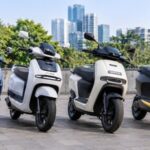
Bajaj Auto reported EV revenue of almost ₹5,500 crore in the first half of FY27, accounting for about 34% of its domestic revenue. Its Chetak electric scooter has crossed 1 million vehicles on the road, while the company’s overall EV business, including electric three-wheelers, has turned margin accretive at the corporate level.
has also acknowledged the need to prepare for a post-incentive environment. Managing director and chief executive officer Girish Wagh said the company was satisfied with its current EV margin structure after accounting for PLI benefits.
“We are happy with the margin structure currently, but we continue to improve on these further because we certainly want to get prepared for the post-PLI environment,” Wagh said during the company’s earnings call on 23 October.
Tata Motors is looking to expand its electric commercial vehicle business, including buses and trucks, where higher vehicle utilization can help improve the economics of electrification. The company recently tied up with Amazon for the deployment of 3,000 electric trucks, adding to its efforts to scale up electric commercial mobility.
Independent analysts have flagged the risks to EV profitability once government support begins to decline. HSBC Global Investment Research said in a report in September that India’s EV adoption faced two structural challenges: the potential reduction in subsidies and the difficulty of lowering manufacturing costs through localization.
“Any reduction in subsidies has to be compensated for by either a reduction in manufacturing costs or an increase in the price of the vehicle and hence passed on to the customer,” Yogesh Aggarwal, Vipul Agarwal and Ayush Jhunjhunwala of HSBC wrote in the report.
Global brokerage Bernstein flagged taxpayer-backed incentives that are propping up the earnings of
“The rapid scale-up of EV volumes has required significant investment and aggressive pricing. Without subsidies and incentive support, margins for several OEMs would likely have been lower,” Venugopal Garre and Nikhil Arela of Bernstein wrote in a 27 August report. “The same argument can be extended, to varying degrees, to companies such as TVS, Bajaj Auto and M&M, where EV initiatives and related investments may have weighed more heavily on profitability with an absent policy support.”
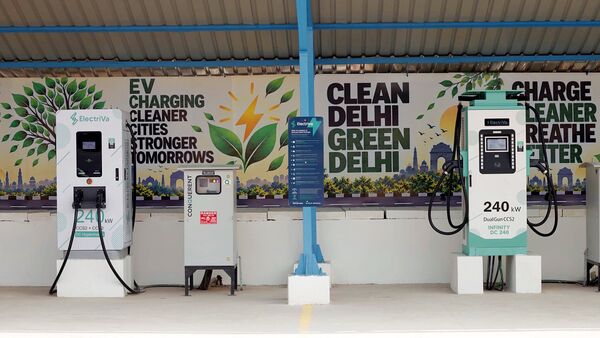
The PLI scheme for automobiles and auto components rewards manufacturers for incremental sales of advanced automotive technology products, including EVs. The PM E Drive scheme provides demand-side incentives to lower the purchase cost of electric two-wheelers, three-wheelers, buses and trucks, alongside support for charging infrastructure.
The PM E Drive scheme, which replaced the Faster Adoption and Manufacturing of Hybrid and Electric Vehicles in India – Phase II scheme, has a budget of ₹11,900 crore and started in October 2024. The PLI scheme for automobiles has an outlay of ₹25,938 crore and began covering sales of EVs in FY24. These incentives are in addition to the 5% goods and services tax applicable to EVs.
HSBC estimates EV subsidies will decline by at least 50% over the next four to five years.