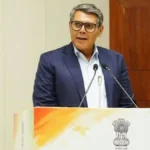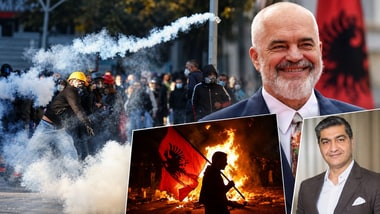
Europe’s economic slowdown, rising living costs and shrinking job opportunities are fuelling public discontent across the continent, including in Albania, where the return of members of the Albanian diaspora is increasing pressure on jobs and economic opportunities, according to Albania’s honorary consul general Dikshu Chandra Kukreja.
Kukreja told LiveMint that the domestic pressures behind the protests need to be understood against the backdrop of wider economic and geopolitical developments across Europe, including the Russia-Ukraine war, other conflicts, rising energy costs and weakening employment prospects.
“Europe’s involvement in the Russia-Ukraine war and other conflicts, coupled with spiralling energy costs, has slowed economic growth and reduced job opportunities across the continent,” he said in an exclusive conversation with LiveMint.
“People are finding the cost of living going higher, while job opportunities are not as plentiful as they were in the past. This has led to a certain kind of disillusionment,” Kukreja said.
These pressures are particularly significant for Albania because of its large diaspora and the possibility of migrants returning home amid economic difficulties elsewhere, as per Kukreja.
The consul general estimated that around 10 million Albanians live worldwide, of whom approximately 2.5 million reside in Albania, with the rest living abroad.
He said economic difficulties in and other parts of the world were encouraging some Albanians to return, adding to domestic pressure on jobs and opportunities.
Kukreja also pointed to the expectations generated by Albania’s economic growth. He said the country’s gross domestic product had tripled over the preceding 12 years, raising expectations among its population even as households faced higher costs and uncertainty over employment.
“Albania has been among the fastest-growing economies in Europe. In the last 12 years alone, its has tripled, unlike much of the rest of Europe, which has experienced periods of recession or zero growth,” he said.
The demonstrations in the Albanian capital, Tirana, have escalated into clashes between protesters and riot police, amid wider grievances over employment, education, living costs and governance.
What began as opposition to a resort development project has widened into a broader expression of public discontent, with students joining protests over tuition fees, deteriorating school infrastructure and limited employment opportunities, as per reports.
Students and young people are particularly vulnerable to economic uncertainty as they contend with the cost of education while preparing to enter a challenging job market.
“Young people at the beginning of their careers are looking for jobs while spending money on education and not yet earning. For them, every penny counts, and resentment emerges earlier and more intensely than among other sections of society,” Kukreja said.
The concerns highlighted by protesters include tuition fees, underfunded classrooms, deteriorating school infrastructure and limited employment prospects. These grievances have helped broaden the demonstrations beyond the dispute over the planned resort project.
The initial protests centred on an island resort development. Kukreja said Albania had witnessed substantial infrastructure expansion over the past decade and described the project as part of a wider wave of development.
“The project has acquired a political dimension because the US president is also involved in real estate development and members of his family are part of the consortium,” he said, adding that the project was being pursued under Albanian law.
Prime Minister, who has been in office for more than a decade and is serving his fourth consecutive term, has faced public pressure amid the demonstrations.
Kukreja said that the protests should not automatically be interpreted as a rejection of the government’s democratic legitimacy, pointing to Rama’s successive electoral victories.
“The buck always stops at the Prime Minister’s office. However, Prime Minister Edi Rama has been in office for over a decade because he has won four consecutive terms as a democratically elected leader,” he said.
Kukreja maintained that the government recognised the right to peaceful protest and said Rama had offered to engage with students to understand their concerns and discuss possible solutions.
“The government’s mandate has been clear: protests are a fundamental right of citizens, and we must acknowledge and respect them as long as they remain peaceful,” he said.
Kukreja said Albanian authorities had instructed law enforcement agencies to handle demonstrations with restraint, while distinguishing peaceful protesters from those involved in violence or damage to public property.
“The instructions to law enforcement agencies have been very clear: protests must be handled sensitively and peacefully, with immense restraint. That is what the Albanian police have been doing so far,” he said.
He argued that the authorities had sought to maintain public order without restricting the fundamental right to demonstrate.
“The right to protest is not only accepted but protected. Violence, however, is not accepted. The concerns of young people and students will be addressed in a responsible and forthright manner,” Kukreja said.
The unrest comes as Albania pursues its ambition of joining the European Union.
Kukreja said the demonstrations would not alter the country’s commitment to European integration, arguing that dialogue and the protection of peaceful assembly remained central to the government’s approach.
“Albania’s commitment to integration remains unchanged. The government remains committed to protecting peaceful protests, ensuring public safety and resolving grievances through constructive dialogue,” he said.
Kukreja said the economic consequences of Ukraine war and the ongoing West Asia conflict extend beyond the countries directly involved, affecting energy prices, economic growth and employment prospects across Europe.
He said similar pressures formed part of the broader backdrop to protests in and elsewhere in , where economic concerns have contributed to public discontent.
“War is not the solution anywhere in the world. Its ripple effects are felt everywhere, sooner or later. Peace and prosperity go hand in hand, and finding solutions for world peace is essential to improving people’s lives,” he said.