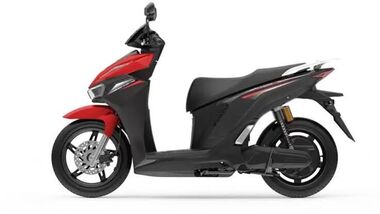
Vietnamese electric vehicle manufacturer VinFast is expanding its plans for the Indian two-wheeler market, with a new patent filing offering a glimpse into a scooter that could be developed specifically for local buyers.
The design features a conventional scooter layout, larger wheels and a relatively simple mechanical setup, suggesting that the company could be exploring a practical offering for India’s price-sensitive electric two-wheeler segment.
According to Autocar India, the latest design patent, filed in April this year, is the fifth two-wheeler design has patented in the country. The patent drawings show a scooter with a rear hub motor, 14-inch wheels, telescopic front forks and twin rear shock absorbers.
However, the filing does not confirm whether the design will enter production or when it could be launched.
The development comes as VinFast prepares to expand beyond electric cars in India and establish a presence in the country’s growing electric two-wheeler market.
The patent drawings offer views of the scooter from multiple angles, revealing a relatively understated design compared with some of VinFast’s existing international models.
At the front, the scooter features the VinFast logo positioned above what appears to be a horizontally mounted headlamp, with integrated indicators on either side. It also gets an exposed handlebar and an instrument cluster that could feature an LCD or TFT display. The patent, however, does not specify the final display technology.
Another notable detail is the use of 14-inch wheels at both ends. The suspension setup appears to comprise telescopic front forks and twin rear shock absorbers. The is also expected to use a rear hub-mounted electric motor, although its output and battery specifications have not been disclosed.
VinFast’s India strategy appears to go beyond importing its existing international products. The company has indicated that it is developing electric scooters specifically for Indian customers, keeping local road conditions, riding requirements and price expectations in mind.
In an interview with Autocar Professional in January 2026, Pham Sanh Chau, CEO of VinFast Asia, said the company was working on India-specific electric scooters ahead of its planned market entry in the second half of 2026.
“These scooters are being developed specifically for the Indian market,” Chau told the publication.
He also highlighted the importance of sourcing components locally to make the products more competitive.
“Local manufacturing is a must if you want to reduce the bill of materials. We are already engaging with Indian vendors, and some have visited our factory,” he added.
Chau also outlined the company’s long-term ambition to build two-wheeler manufacturing capacity of one million units. This is a long-term capacity ambition rather than an immediate production target. The two-wheeler programme is expected to be housed at VinFast’s facility.
The latest filing follows several other two-wheeler design patents by the Vietnamese manufacturer in India.
Previous filings have included designs resembling its Viper and Rasad electric scooters, along with an electric motorcycle believed to be based on the Sulad concept.
The Viper is a sporty electric scooter sold in overseas markets, while the Rasad has a maxi-scooter-inspired design with a tall windscreen, chunky tyres and disc brakes at both ends.
The newly patented design, however, appears different from these international models, indicating that VinFast could be considering a separate product for India rather than relying entirely on its existing global portfolio.
VinFast has signed letters of intent with more than 50 electric two-wheeler dealers across 15 states and union territories. Its proposed retail network is expected to cover 34 cities, including Delhi, Mumbai, Bengaluru, Chennai, Ahmedabad and Jaipur.
The company has not yet confirmed the final Indian product line-up, prices or launch dates for its electric scooters.
The latest patent also does not disclose the battery capacity, motor output, riding range or charging time. These details will be crucial in determining how the scooter competes with established brands such as TVS, Bajaj, Ather, Hero and Ola Electric.