India risks becoming an exporter of data to train AI models without possibly capturing the economic value generated from it, even as AI companies and startups are seeking data and using India as a data collection ground for Physical AI and embodied robotics on how to navigate the physical world.
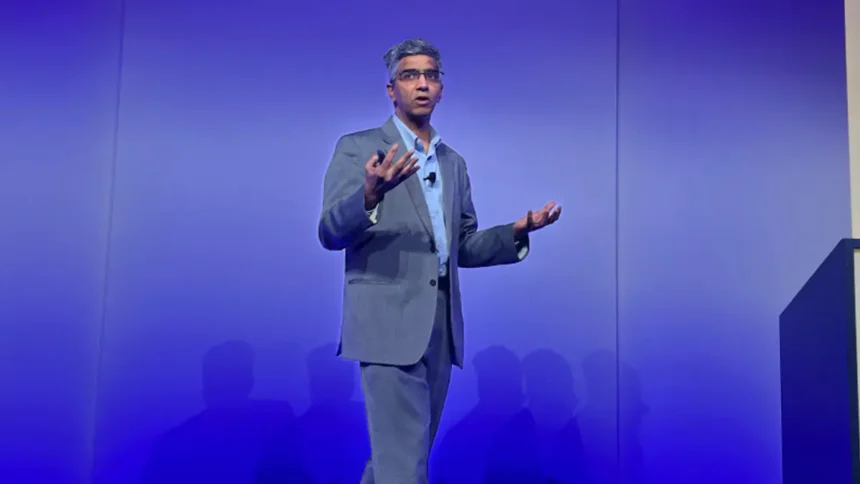
Speaking in Gartner’s IT Symbosium/Xpo, Arun Chandrasekaran, Distinguished VP Analyst at Gartner said, “It is unfortunate that India is becoming exporters of data where we’re not able to monetise the value of the data.”
The country’s importance as an AI market comes as it becomes among the important markets for major AI companies. India accounts for 5.8 per cent of Claude.ai usage, making it Anthropic’s second-largest market after the US, according to the company’s February 2026 India report. OpenAI’s India head has also said the country has become ChatGPT’s largest market globally by weekly active users.
However, the scale of adoption and the data generated in the process do not necessarily translate into value for Indian businesses, Chandrasekaran said. He pointed to the absence of sufficiently strong data privacy and data-sharing frameworks as a concern for developing markets such as India.
The concern comes at a time when the economics of AI are also being reassessed by enterprises and investors. More than 50 per cent of Gartner’s clients have told the analyst firm that they are not getting sufficient value from AI agents, Chandrasekaran shared.
While companies are continuing to invest in AI, buyers are moving away from deploying experimental projects across departments without a clear assessment of returns. Instead, they are focusing on use cases where the benefits can be measured and scaling those applications, while discontinuing projects that do not demonstrate value.
“I don’t think people are getting disillusioned with AI yet,” he said, answering to a question from businessline, adding that the market was undergoing a recalibration rather than a retreat from the technology.
Investor interest, meanwhile, is shifting towards areas such as cybersecurity, AI harnesses, vertical AI and the data and context layer, as investors look for opportunities beyond the expensive business of developing foundational models.
For India, Chandrasekaran said, the opportunity lies not in competing directly with the US and China in building frontier models, but in strengthening capabilities suited to its needs. These include speech-aware models for its multilingual population, specialised AI applications in sectors where the country has an established presence, and greater availability of quality datasets.
He identified computing infrastructure, data and research as three foundational requirements for countries seeking to build AI capabilities. India needs to do more to improve data quality, standards and sharing, including making more government datasets available for innovation, he said.
Published on November 17, 2026