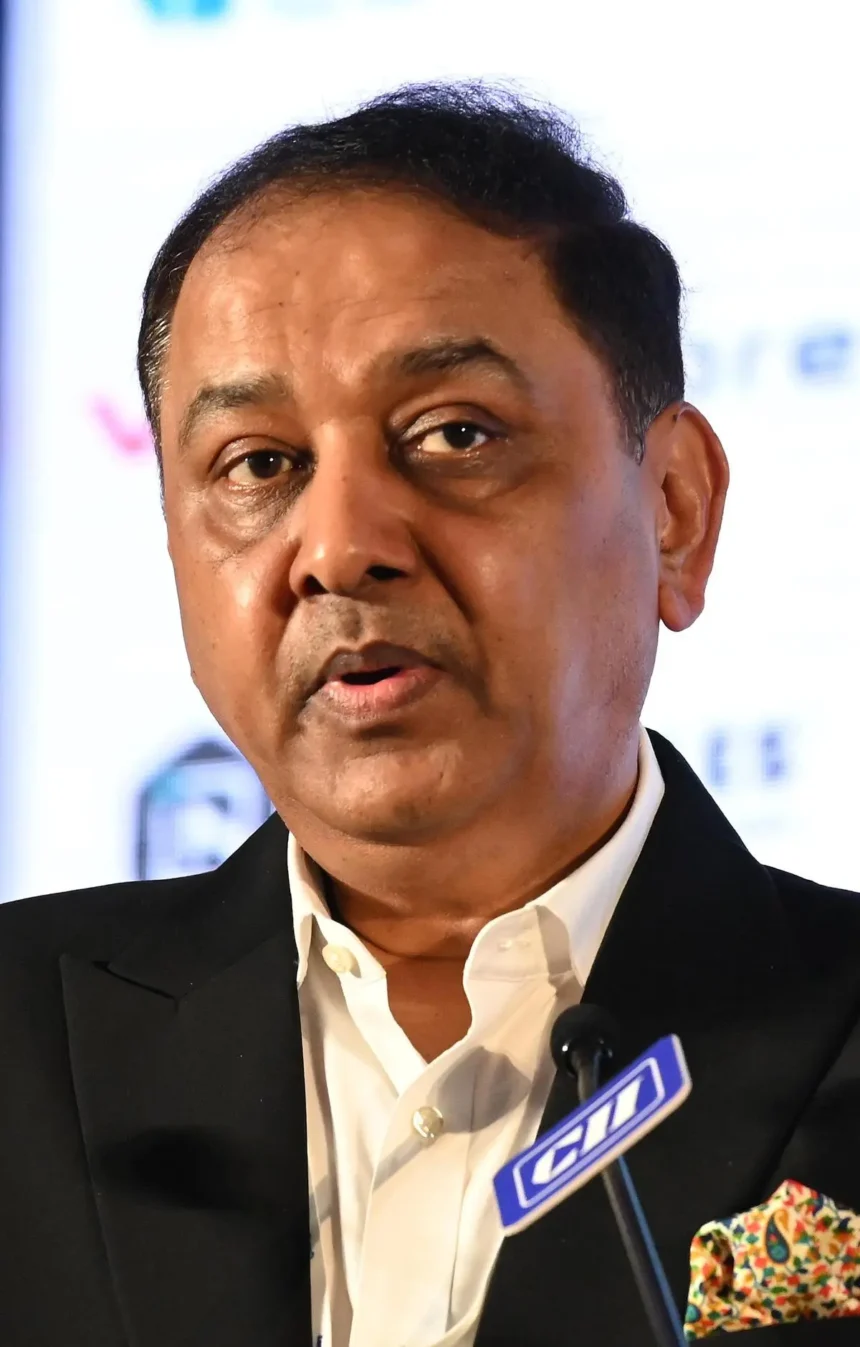
A strong demand environment is prompting commercial vehicle (CV) major Ashok Leyland to accelerate capacity planning.
Speaking to analysts, Shenu Agarwal, Managing Director and CEO, Ashok Leyland Ltd, said that during the quarter ended September 2026 (Q2), the company operated at close to 90 per cent capacity utilisation and it has been taking “proactive steps” to ensure that capacity does not become a constraint to growth.
“In the near term, we are pursuing focused de-bottlenecking initiatives across our facilities to unlock additional capacity with limited capex. In parallel, we are also progressing our plans for a greenfield manufacturing facility to support the next phase of growth,” Agarwal said. The company did not specify the locations it is scouting for its new unit.
While the capex in FY27 so far is about ₹400 crore, the company expects it to go to ₹1,000-1,200 crore for the whole year. The management expects double-digit growth in the MHCV industry for the full year, with growth likely to reach “mid-teens.” The light commercial vehicle (LCV) segment is also expected to register similar growth.
Ashok Leyland’s domestic MHCV volumes grew 44 per cent year-on-year, outperforming the industry, management said. Domestic MHCV market share for the quarter stood at 32.1 per cent, up 120 basis points year-on-year.
With regard to electrification, management said it is preparing both the technology and the supply chain, with ongoing plans for a new battery manufacturing facility, and expects production to commence in Q3 of next year. “All approvals are now in place for our new battery pack facility at Pillaipakkam near Chennai. The construction work has started,” Agarwal said.
The initial capacity is about 4 GWh, which will be sufficient for its own captive demand, and the factory is being built in a way that it can go to 8-12 GWh.
On the sustained commodity price inflation, particularly in steel and natural rubber, the company said it is weighing on profitability and driving them to seek further price increases.
“We just cannot pass on the entire increase to the market in one go,” the management said, explaining that price increases were being implemented gradually.
“In Q3 also, we are trying to take about 100 to 150 basis points of price increase. In Q4, we will go ahead with one more, most likely, and then we will see how the situation is at the end of this fiscal year,” Agarwal said.
Published on November 17, 2026