Delhi-NCR has come under stricter pollution-control measures just days before Diwali, with the Commission for Air Quality Management (CAQM) invoking Stage III of the Graded Response Action Plan (GRAP) from Friday, November 6.
The move brings fresh curbs on construction activity, older vehicles and industrial operations, while also allowing authorities to consider changes to school and office arrangements.
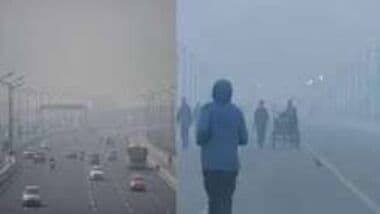
The restrictions were imposed as a precautionary measure amid deteriorating air quality. Delhi’s average Air Quality Index (AQI) stood at 382 on Friday, in the ‘very poor’ category, although several monitoring stations recorded readings in the ‘severe’ range. Stage III measures have been added to the restrictions already in force under Stages I and II.
GRAP is an emergency framework under which authorities introduce progressively stricter measures to contain air pollution across Delhi and the National Capital Region. Under the revised framework, Stage III is associated with the ‘severe’ air-quality category. However, can invoke restrictions pre-emptively based on forecasts and the likelihood of air quality worsening.
The latest decision came despite Delhi’s average remaining in the ‘very poor’ category, with the commission opting to act before pollution levels deteriorate further.
Non-essential construction and demolition activities have been prohibited across The restrictions cover excavation, earthwork, piling, trenching, drilling, boring, demolition, brickwork, masonry, road construction and major repairs.
Activities such as painting, polishing, varnishing, major welding, gas-cutting and cutting or grinding tiles and stones are also restricted. The movement, loading and unloading of dust-generating materials such as cement, sand, bricks, fly ash and crushed stone face curbs, particularly on unpaved roads.
Stone crushers, mining operations and hot-mix plants that do not use approved clean fuels must remain shut.
BS-III petrol and BS-IV diesel or older light motor vehicles, including four-wheelers, are barred from operating in Delhi and five high-vehicle-density NCR districts: Gurugram, Faridabad, Sonipat, Ghaziabad and Gautam Buddha Nagar (Noida).
Vehicles specially adapted for persons with disabilities and used for their personal travel are exempt.
Additional restrictions apply to certain goods vehicles. BS-IV and older diesel medium goods vehicles registered in Delhi are restricted, while such medium goods vehicles and light goods vehicles registered outside Delhi are not permitted to enter the capital.
The use of diesel generator sets is prohibited, except for those required to provide emergency and essential services. Non-compliant industrial units, including stone crushers and hot-mix plants not using clean fuels, also face closure or operational restrictions.
Construction work linked to essential infrastructure projects can continue, subject to prescribed dust-control measures. Other construction activities that generate relatively less dust or pollution may also be permitted if they comply with the applicable dust-mitigation and construction-waste management norms.
Metro services and public buses can continue operating. Authorities are also expected to add Metro trips and deploy additional buses to encourage commuters to use public transport instead of private vehicles. Vehicles that are not covered by the restrictions, including eligible BS-VI, CNG and electric vehicles, can continue to operate subject to other applicable rules.
Schools up to Class 5 in Delhi and the NCR districts of Gurugram, Faridabad, Ghaziabad and Gautam Buddha Nagar are required to conduct classes in hybrid mode, allowing students to attend either physically or online wherever feasible. Other NCR districts may also consider adopting this arrangement.
State governments and the Delhi government may decide whether public, municipal and private offices should operate with 50% of their staff physically present, with the remaining employees working from home. The Central government can take a separate decision for its employees. Private offices have also been advised to consider work-from-home or hybrid arrangements.