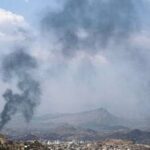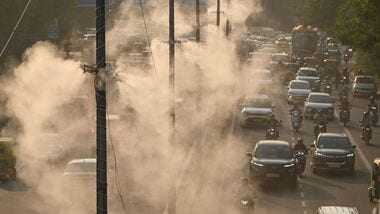
With air quality in Delhi slipping into the ‘poor’ category, the statutory measures mandated under Stage I of the Graded Response Action Plan (GRAP) have come into force across the National Capital Region (NCR) from Wednesday.
Revised by the Commission for Air Quality Management in the National Capital Region and Adjoining Areas (CAQM), GRAP classified deteriorating air quality into four distinct stages, with Stage I automatically invoked when the Delhi Air Quality Index (AQI) hovers between 201 and 300.
As citizens grapple with the onset of winter smog, here are some common questions surrounding the operational status of schools, what remains permissible and what faces outright bans across Delhi.
Under Stage I of GRAP, schools across Delhi and the NCR remain fully open and operational. The official GRAP schedule clearly indicates that no school closures, hybrid classes, or restrictions on educational institutions are mandated under Stage I.
Restrictions affecting educational institutions only kick in during higher pollution thresholds:
Under Stage III (‘Severe’ AQI 401–450): Governments are directed to mandatorily conduct classes for children up to Class V in a “Hybrid” mode (both physical and online, where feasible) in Delhi and the districts of Gurugram, Faridabad, Ghaziabad, and Gautam Buddha Nagar, with the choice of online mode vesting with guardians.
Under Stage IV (‘Severe +’ AQI > 450): The hybrid mode expands to higher classes (Classes VI to IX and Class XI). State governments may also consider emergency measures, such as the complete closure of colleges and other educational institutions, only under Stage IV.
Therefore, under Stage I, standard physical schooling continues uninterrupted across NCR.
Stage I of GRAP focuses primarily on proactive dust control, strict emissions enforcement, vehicle regulation, and waste management.