



New Delhi: The Department of Financial Services (DFS) has called a meeting with the chairman of State Bank of India and the managing directors and chief executives of all public sector banks on 6 October to review the progress of the government’s financial inclusion schemes, according to two people aware of the development and documents reviewed by Mint.
The meeting, scheduled from 11 am, will be chaired by the secretary and will review the progress of various flagship schemes being implemented by the department. “Other financial inclusion related issues may also be discussed in the meeting,” a document said.
“Financial inclusion schemes have been a key structure of the government to improve savings, credit and security to the weaker sections. Provision and growth of financial services typically leads by a margin of around 2:1. For the marginal segments, the improvement is even higher since it leads to difference from being marginalised to moving towards empowerment,” said Sanjay Agarwal, senior director, CareEdge Ratings.
Queries emailed late on Tuesday to the finance ministry, financial services secretary, Indian Banks’ Association () and 12 public sector banks remained unanswered till the time of going to press.
The review comes as the government continues to focus on expanding access to formal financial services, including banking and other financial products, particularly through public sector banks.
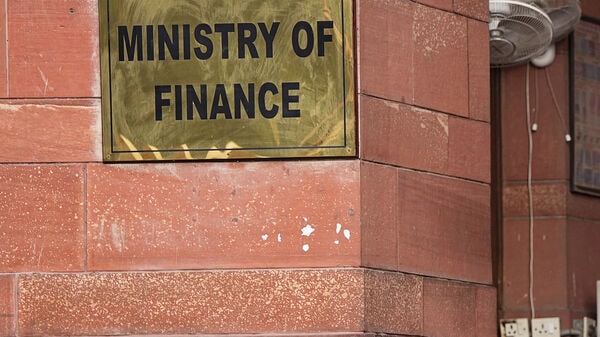
The DFS, under the Ministry of Finance, leads the government’s financial inclusion efforts through several flagship schemes. At the core is the Pradhan Mantri Jan Dhan Yojana (PMJDY), launched in August 2014 as the National Mission for Financial Inclusion. It aims to provide every unbanked adult a basic savings bank account with no minimum balance requirement, a free RuPay debit card carrying accident insurance cover, an overdraft facility of up to ₹10,000 and access to Direct Benefit Transfers.
A recent Press Information Bureau release said that, as of 19 August, more than 590 million Jan Dhan accounts had been opened, with 56% held by women and a substantial majority in rural and semi-urban areas. Deposits in these accounts exceeded ₹3.17 trillion.
Building on this base, the Jan Suraksha schemes—Pradhan Mantri Jeevan Jyoti Bima Yojana (PMJJBY) and Pradhan Mantri Suraksha Bima Yojana (PMSBY)—offer low-cost insurance cover. PMJJBY provides ₹2 lakh of life cover for individuals aged 18–50 at an annual premium of ₹436, while PMSBY provides ₹2 lakh of accidental death or total disability cover, and ₹1 lakh for partial disability, for those aged 18–70 at ₹20 a year. Atal Pension Yojana (APY) provides a guaranteed monthly pension of ₹1,000 to ₹5,000 after age 60 for workers aged 18–40 in the unorganized sector.
Other schemes provide access to credit. The Pradhan Mantri Mudra Yojana (PMMY) extends collateral-free loans of up to ₹20 lakh to micro and small enterprises, while Stand-Up India supports SC/ST and women entrepreneurs with loans of ₹10 lakh to ₹1 crore.
Together, these initiatives are anchored by the JAM trinity of Jan Dhan, Aadhaar and mobile, and are aimed at expanding access to banking, insurance, pension and credit.