



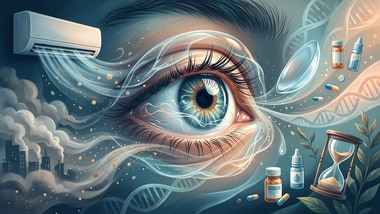
The immediate suspect for dry, irritated eyes in an increasingly digital world is often blamed on prolonged use of smartphones and computer screens. However, while digital eye strain is a significant contributor, ophthalmologists said that dismissing dry eye as merely a consequence of too much screen time overlooks a complex web of environmental, physiological, and medical factors.
With World Sight Day approaching on October 8, eye care experts told LiveMint that dry eye syndrome has hidden culprits and urged people to look beyond their devices to protect their overall ocular health.
Dry eye syndrome is a widespread condition that occurs when the tear film—the natural layer of tears that coats the front of the eye —breaks down, according to Dr Sowmya M, Senior Consultant Ophthalmologist at Dr Agarwals Eye Hospital, Bengaluru.
Under normal circumstances, she said, this stable, homogeneous layer protects the cornea and conjunctiva from damage caused by constant exposure to air. This tear film interface is also responsible for a significant portion of the eye’s focusing power.
“When the tear film becomes unhealthy, it breaks down in different places on the cornea and conjunctiva, leading not only to symptoms of irritation, but also to unstable and intermittently changing vision,” Dr Sowmya explained.
The medical professionals also emphasise that treating dry eye requires a holistic view of the patient’s health and .
“Screen time is just one piece of the puzzle in dry eye,” says Dr Sujal Shah, Director of Ophthalmology at Sir HN Reliance Foundation Hospital. “The health of the ocular surface depends on a delicate balance between tears, the oil-producing meibomian glands, the eyelids and the surrounding environment.”
Dr Shah pointed out that multiple everyday factors and underlying health conditions play a role. “, hormonal fluctuations, continuous exposure to air conditioning, pollution, and smoke can severely affect eye moisture. Furthermore, contact lens use and eyelid inflammation are common triggers.”
Crucially, Dr Shah said, the systemic conditions, such as hypothyroidism or arthritis, and everyday like anti-histamines and decongestants are often overlooked.
“While reducing screen time would help with symptoms of dry eye, we also need to identify the underlying cause and treat the ocular surface as a whole,” he said.
The severity of dry eye can range from mildly irritating to entirely debilitating for the general population. Dr Sowmya M pointed out that common symptoms extend beyond basic dryness to include:
If you experience these symptoms, Dr Sowmya noted that diagnostic tests to assess tear health include evaluating tear film height, using a Schirmer’s strip test to grade the severity of the condition, fluorescein staining and imaging, and meibography.
Because the underlying causes of dry eye are diverse, treatment modalities vary, according to Dr Sowmya. Common interventions include artificial tears (ideally those without redness-relieving components), longer-acting gels, and ointments such as hydroxypropyl cellulose inserts. Patients may also benefit from warm compresses and daily eyelash and eyelid scrubs.
For more advanced cases, tear-conserving interventions like punctal plugs or nighttime masks and goggles are recommended.
Additionally, doctors may also prescribe medications to increase tear production—such as Restasis, Cequa, or Xiidra—or utilise short bursts of topical ophthalmic steroids to help control the inflammatory aspects of the disease, she said.
Observed annually on the second Thursday of October, World Sight Day falls on October 8 this year.
Driven by the global theme #LoveYourEyes, the day serves as a critical reminder to prioritise vision health and seek timely professional care. By understanding that conditions like dry eye are multifaceted and not merely a byproduct of modern screen habits, individuals can take proactive steps to keep their eyes comfortable, healthy, and protected.