


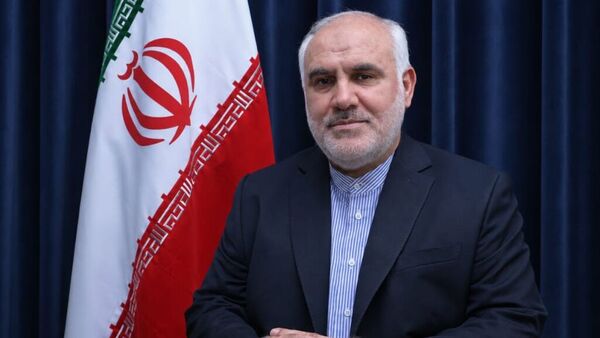
If a genuine path toward diplomacy, mutual respect, and adherence to international law is restored, Iran is also prepared to engage, Tehran’s ambassador to India, Dr Mohammad Fathali, said in an emailed interview.
He said that from Iran’s perspective, the New Delhi Declaration at the 18th Brics Summit was important because it emphasized national sovereignty, territorial integrity, respect for international law, and opposition to unilateral actions; while also expressing serious concern over attacks on peaceful nuclear facilities under safeguards, the humanitarian situation in Gaza, and attacks against civilians and civilian infrastructure.
He added that the 11-member grouping of major emerging economies and developing countries can serve, in the face of regional crises, as a platform for dialogue, cooperation, and reaching consensus based on the principles of international law.
While clarifying that there are no talks underway for oil supply to India, he said that Iran would welcome the expansion of energy cooperation and engagement with Indian oil and gas companies.
Fathali said that the development of and the International North-South Transport Corridor (INSTC) can play an important role in expanding trade exchanges and more effectively connecting India with Iran, Central Asia, and beyond. Edited excerpts.
I must emphasize that Iran was not the initiator of this confrontation; however, it cannot remain passive in the face of aggression and threats against its security and sovereignty. The course of developments largely depends on the choice of the other side: if aggression and threats continue, Iran will exercise its right to self-defence; and if a genuine path towards diplomacy, mutual respect, and adherence to international law is restored, Iran is also prepared to engage.
On the diplomatic front, Iran emphasizes at the UN the equal and non-selective implementation of international law, respect for the sovereignty of states, the protection of civilians, and holding those responsible for violations of international law accountable; because Iran cannot be expected to accept international restrictions and obligations while remaining silent about the nuclear capabilities of the Zionist regime, which is not a member of the NPT (Treaty on the Non-Proliferation of Nuclear Weapons).
Attacks against civilians also require investigation and accountability. Iran’s objective is not the continuation of the conflict; a sustainable path towards regional stability lies not through pressure and military dominance, but through respect for the sovereignty of states, the protection of civilians, the equal implementation of international law, and a serious return to diplomacy.
India was an outstanding host for the 18th and, more broadly, for the Brics chairmanship in 2026. India advanced Brics with an inclusive approach based on dialogue and consensus, and we appreciate its efforts to preserve a spirit of cooperation under difficult regional circumstances.
From Iran’s perspective, the Delhi Declaration was important because it emphasized national sovereignty, territorial integrity, respect for international law, and opposition to unilateral actions, while also expressing serious concern over attacks on peaceful nuclear facilities under safeguards, the humanitarian situation in Gaza, and attacks against civilians and civilian infrastructure. We believe that these positions demonstrate that Brics can serve, in the face of regional crises, as a platform for dialogue, cooperation, and reaching consensus based on the principles of international law.
Relations between Iran and India are deep-rooted and based on profound historical, civilizational and cultural ties that have developed over centuries and continue today across various fields, including political, economic, commercial and cultural cooperation, as well as regional connectivity. In Iran, we regard India as an important and friendly country, and we believe that the potential of relations between the two countries extends far beyond their current level.
In recent years, the continuation of high-level political consultations, the development of economic and commercial cooperation, and progress on the strategic Chabahar Port project have created new opportunities to further deepen these relations. We believe that, by building on mutual trust, respect for the interests of both sides, and the complementary capacities of the two countries, we can further strengthen Iran-India relations towards a sustainable, comprehensive and long-term partnership.
Chabahar Port, from Iran’s perspective, is not merely a port project; rather, it is one of the main pillars of the strategic cooperation between Iran and India and an important link connecting India with Iran, Central Asia, and other regional markets. In this context, the signing of the 10-year long-term contract in 2024 for the development and operation of the Shahid Beheshti Terminal at Chabahar was an important step towards making this cooperation more operational, and India has also undertaken specific financial commitments for the development of the port.
From Iran’s perspective, Chabahar, alongside the International North-South Transport Corridor, can help facilitate trade, reduce transportation costs and transit times, and provide India with more effective access to Afghanistan, Central Asia, and beyond. Therefore, we consider the development of infrastructure, the expansion of transit capacities, and the strengthening of cooperation between the public and private sectors of the two countries essential to fully realizing Chabahar’s potential, and we believe that this port can become one of the most important foundations of a long-term and mutually beneficial Iran-India partnership in the field of regional connectivity.
What the international community needs to understand about these findings is that attacks against civilians and civilian infrastructure, particularly children, cannot be ignored. The report of the UN Independent International Fact-Finding Mission on Iran, in its examination of the attack on Shajareh Tayebeh Elementary School in Minab, has pointed to serious concerns regarding compliance with international humanitarian law and the protection of civilians; according to information documented through UN mechanisms, 168 people, almost all of them students and teachers, lost their lives in this attack.
The attack on Lamerd was not merely a military incident; in light of the evidence available, fundamental principles of international law, including the principle of distinction between civilians and military objectives, the principle of proportionality, and the principle of precaution in attacks, were violated. These attacks were carried out in civilian areas at a time when children and adolescents were present at the sports complex, resulting in the deaths of at least 21 civilians and injuring 170 others. The technical evidence presented in the report, including indications of an airburst and thousands of fragmentation impact points, is consistent with the use of PrSM (Precision Strike) missiles.
In our view, these findings further demonstrate the need for an independent and transparent investigation and for those responsible for such attacks to be held accountable, because protecting the lives of civilians and ensuring the equal and non-discriminatory implementation of international law are shared responsibilities of the international community.
The attack by the criminal US regime on a wedding ceremony in Kuhestak in southern Iran, in which civilians, including children, were killed and dozens of others were injured, is another example of US crimes against civilians. The UN Independent International Fact-Finding Mission also referred to this incident and emphasized the need to protect civilians and uphold the fundamental principles of international humanitarian law, including the principles of distinction and precaution.
We expect the international community to investigate this incident and other similar cases independently, transparently, and impartially, determine the responsibility of those involved, and ensure that the victims have access to effective mechanisms of justice and reparation.
No. We have not held any negotiations in this regard.
Yes, certainly. Iran is an oil- and gas-exporting country and, within the framework of its interests and capacities, is ready to cooperate with buyers and commercial partners. We have also had good oil trade with India in the past, and if economic conditions improve and the war subsides, we would welcome the expansion of energy cooperation and engagement with Indian oil and gas companies.
We believe that true friends are recognized in difficult times, and the government and people of India stood by the people of Iran during those difficult days. Following the martyrdom of President Ebrahim Raisi, India was among the few countries that declared a period of national mourning and expressed its condolences to the Iranian people, and this gesture held special significance for the people of Iran. Likewise, following the martyrdom of Ayatollah Khamenei, there were memorable expressions of sympathy and solidarity from the people of India that will undoubtedly remain forever in the historical memory of the Iranian people. This level of sympathy and solidarity goes beyond official relations between governments and reflects the deep and historic bonds between the two peoples.