



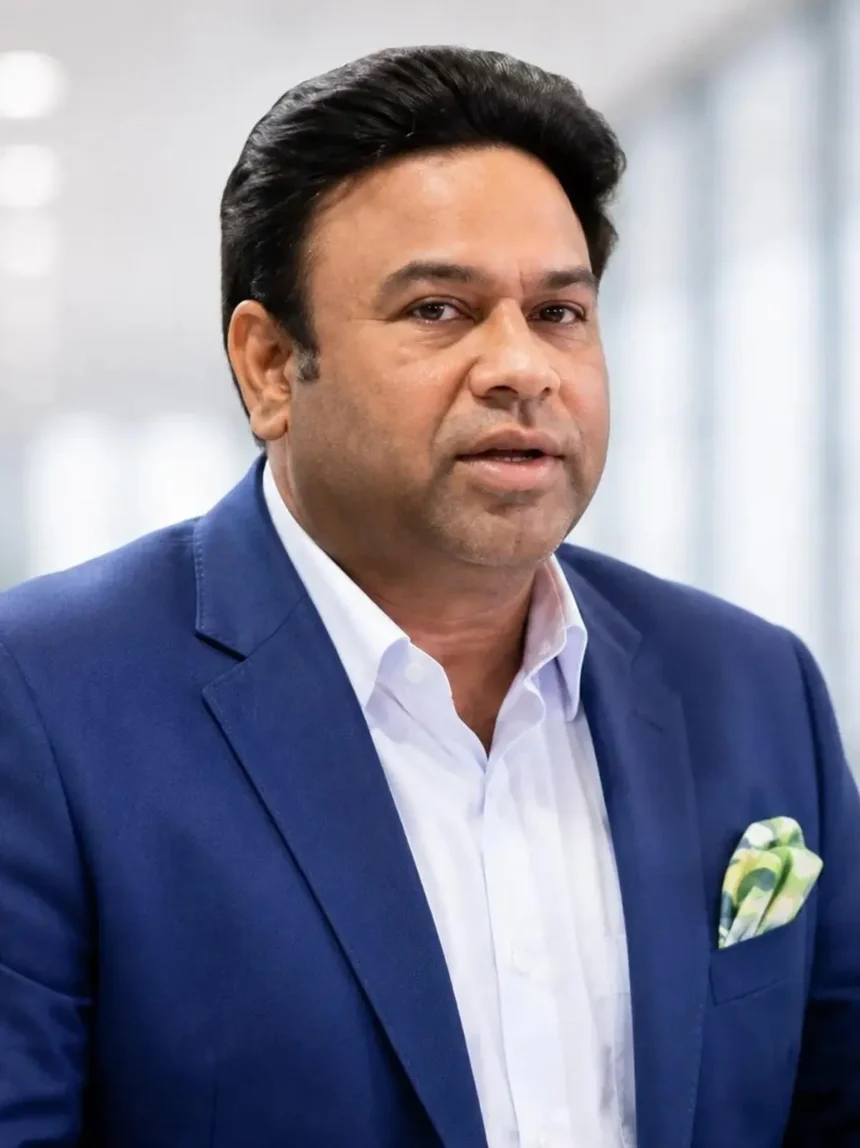
Steel industry has been on a major expansion spree and targets to enhance capacity to 300 million tonne per annum (mtpa) by 2030 from the current 222 mtpa. Though ample iron ore and coal reserves are available in India, the industry has to depend on imports for ferro alloys, especially that of manganese. India imports about 60-65 per cent of its manganese ore requirement from South Africa, Gabon and Australia. Manganese is an essential additive in steel-making that removes impurities and significantly improves strength, toughness and wear resistance. Its usage will increase further as steel companies focus on improving the quality, according to Manish Sarda, Deputy MD, Sarda Metals & Ferro Alloys.
Edited excerpts:
What are the key challenges facing the mining industry?
One of the key issues is the high premium being quoted in mining auctions. The government needs to re-look at the system because the highest premium does not necessarily mean that the mine will actually come into production. If the premium makes the mine unviable, it can eventually lead to surrender of the mine. We have seen examples of manganese mines in Odisha being awarded at premiums of about 140 per cent, which is clearly difficult to sustain economically. Mining also has to be carried out in a systematic and responsible manner, with adequate safeguards for ecology and the environment. If mining is done properly at a viable premium while maintaining ecological balance, there should not be an issue.
Should the government tighten the qualification criteria for companies bidding for mines?
The government could look more closely at the actual users and their qualifications. Companies are competing aggressively for resources because they want raw material security, so it is a difficult situation to manage. One possible approach is a public-private partnership model, where mining actually starts and the pricing of ore and profitability-sharing mechanism are determined using international ore indices. That would provide transparency and give companies greater raw material security instead of forcing them to depend entirely on imports.
Is manganese ore going to become a major constraint as steel capacity expands?
The country has adequate capacity to produce manganese alloys and is meeting domestic requirements before exporting. Manganese ore imports, however, are taking place on a significant scale, while imports of manganese alloys are restricted. The bigger concern is future availability of ore. If major mining countries such as South Africa, Ghana, Gabon and Australia increasingly focus on developing their own downstream value-addition, it could become a significant challenge for the Indian manganese alloy industry. We need to develop our own mineral resource base through greater exploration. Raw material resource security has become strategically important, particularly as countries around the world increasingly seek to secure resources and add value within their own economies.
How important is exploration for India’s mineral security?
It is extremely important. This is a futuristic concern because many countries are increasingly securing their own raw materials and promoting value-addition domestically. India has not undertaken enough deep exploration for high-grade mineral ores such as manganese and chrome. These resources are also concentrated in certain States. We, therefore, need to explore more extensively and understand where our resource base lies, and then bring those resources into production. The government has the capability and institutional infrastructure to undertake exploration. It should explore deposits to a stage where they become viable and commercially saleable. Currently, we are seeing either very low premiums and limited interest or very high premiums for proven resources.
What is the raw material challenge for the steel industry?
India has substantial iron ore and coal resources. What is important is upgrading low-grade resources to make them commercially useful, and that is already happening on a significant scale. Costs could rise to some extent because of carbon-related requirements and stricter mining regulations, which are necessary. However, if the industry scales up, costs can eventually come down.
What steps you are taking to meet CBAM norms to tap EU?
Carbon Border Adjustment Mechanism (CBAM) will be a challenge during the transition. It will take some time for the industry to adapt, but it is a process that companies will have to go through. Those that evolve faster and adapt to the new requirements will be in a better position. We are investing in solar and hydropower and are trying to reduce our carbon footprint through waste-heat recovery and utilisation of waste gases. We have recently taken up a ₹300-crore expansion plan at our Vizag plant for waste-heat recovery and utilisation of waste. We hope to gradually move through this process and make our operations as green as possible. We are looking at solar and hydropower projects in the northeastern States and Chhattisgarh. We currently have two or three projects under consideration. Some of these investments are still at the discussion stage, and we are continuously evaluating the available opportunities.
Published on September 24, 2026