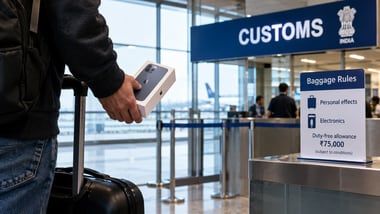
A dispute over whether a newly purchased can be brought into India without paying customs duty has put Kochi airport in the spotlight.
An NRI passenger from , identified as Ajas Muhamad, was booked by the Nedumbassery police after refusing to pay a duty demand of nearly ₹30,000 on an iPhone 18 Pro he had purchased in .
The disagreement was not simply about the amount being charged. It centred on how customs rules distinguish between personal belongings and newly purchased goods brought into India from abroad.
Ajas maintained that the phone was meant for his personal use and argued that carrying two devices should not automatically make one liable for duty.
officials, however, reportedly took the view that the newly purchased phone did not qualify for the exemption applicable to used personal effects.
Ajas arrived at Nedumbassery airport from the UAE in October, carrying a new as well as an older phone he had been using. According to reports, customs officials questioned him about the new device and informed him that he would have to pay customs duty to take it out of the airport.
The amount reportedly demanded was between ₹20,000 and ₹30,000. Ajas refused to pay, saying the phone was for his own use. He also claimed that other passengers arriving on the same flight had faced similar demands.
After the disagreement escalated, Ajas staged a sit-in protest at the airport. personnel intervened and escorted him away from the customs area.
Customs officials subsequently filed a complaint alleging that he had obstructed them from performing their duties. The Nedumbassery police registered a case against him.
Ajas left the phone in customs custody and said he would challenge the decision legally.
The dispute has drawn attention to the , 2026, which came into force on 2 February. Under these rules, eligible Indian residents, tourists of Indian origin and certain foreign nationals are entitled to a general duty-free allowance of ₹75,000 when arriving by air.
The rules also allow used personal effects required for daily necessities of life to be brought into India without duty. However, this does not mean every newly purchased is automatically exempt simply because the passenger intends to use it personally.
The rules define personal effects as articles, new or used, that a passenger may reasonably require for personal use during a journey, excluding goods brought in for commercial purposes.
But the specific duty-free provision for refers to used items required for daily necessities. New purchases are also subject to the general allowance and other applicable conditions.
This is where the Kochi dispute becomes complicated. Ajas reportedly bought the iPhone in Dubai for around Dh5,950, a value above the ₹75,000 general allowance. Customs officials appear to have treated the new device as a dutiable purchase, while Ajas has questioned why it should not qualify as a personal-use item.
The rules do not set a simple blanket limit of one mobile phone per passenger. However, carrying a device for personal use does not, by itself, really settle whether it qualifies for clearance.
The incident has since triggered debate among and frequent international travellers, many of whom have shared similar experiences at airport customs counters.