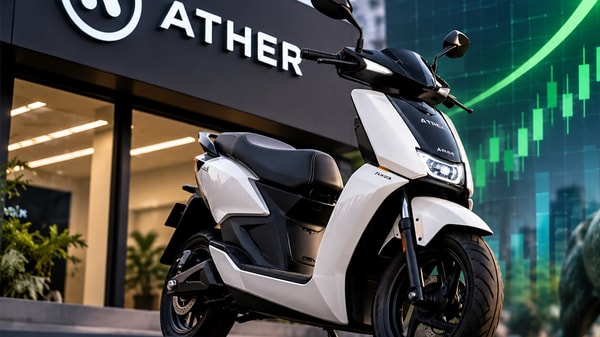
NEW DELHI: Tarun Mehta-led Ather Energy expects low-range, cheaper electric scooters to drive sales even as the company works on rolling out its longest-distance models over the next few quarters in a market where crosstown rival Ola Electric is betting on higher-range two-wheelers.
According to the company’s estimates, an average Ather customer rides 27-28 km a day, suggesting that most users do not need the 160-200 km range offered by premium electric scooters. The company is betting that customers will increasingly choose smaller battery packs once they compare the additional cost of higher range with their actual daily usage.
Ather’s view comes as the electric two-wheeler industry has stepped up its range race. In August, Ather unveiled the Konarc with a claimed range of 200 km, while Ola Electric showcased a scooter claiming about 300 km of range. The announcements put range back at the centre of the competition between the new-age electric scooter makers.
“Range is an issue before you buy. After you buy, it stops being an issue because there is actually no problem,” Ather’s chief business officer Ravneet Phokela told Mint. “If you look at the average usage, an Ather customer does about 27-28 km a day. If I give you 80 km of range, that’s three days of range. And if charging is easily available at home, you don’t need much more.”
Phokela, however, said the importance of range changes as a customer moves closer to making a purchase. The difference matters because the battery is the most expensive component of an electric scooter. A customer opting for a larger battery is effectively paying for range that may rarely be used, according to the executive.
“If you’re buying an over-spec battery, you’re paying more money for a range that is not required,” Phokela said.
Subhabrata Sengupta, a partner at Avalon Consulting, said there is a case for betting on lower range scooters but noted the need to address range anxiety.
“Even if average use is 27 km, range anxiety is real – customers think in terms of would there be a problem if I cannot charge one night or what if one has to travel a longer distance,” Sengupta said. “There is a segment which wants the flexibility to use the EV like an ICE vehicle – for them, higher range is important.”
Ather is preparing a lower-range version of the Konarc that can run 80-90 km, Phokela said. The company expects such a model to appeal to customers who use their scooters mainly for daily commuting and have access to charging at home.
The comments mark a different approach to the range race from the one pursued by Ola Electric, which has increasingly used battery capacity and claimed range as a headline feature of its scooters.
On its November 2025 earnings call, Ola founder Bhavish Aggarwal said the next wave of customers would require a stronger product proposition, including higher range, and that its indigenously developed 4680 cell battery pack-based scooter offered the range needed by these users.
“Industry has gotten into a phase where the next set of customer segments has to be unlocked,” Aggarwal said. “For range, we have 4680 products which meaningfully improve the range of the product in the city… That range is required for the next set of users in the city for scooters.”
Ola Electric unveiled its highest-range product in August which is expected to scale sales next year.
While Ather’s pitch is cheaper, lower-range scooters, Ola wants to challenge the firm by using higher-range scooters that are affordable owing to what it claims is the result of its in-house cell manufacturing. Ola’s 300 km range scooter is expected to be ₹20,000 cheaper than Ather’s 80-90km range variant of the Konarc.
The argument comes as the fortunes of Ather and Ola Electric have moved in opposite directions. Ather has steadily gained ground in India’s electric two-wheeler market, while Ola has lost its early lead as established two-wheeler makers TVS Motor and Bajaj Auto expanded their electric scooter offerings.
Ather sold 93,000 scooters in the September quarter, up 42% from a year earlier. Its revenue rose 63% to ₹1,464 crore, with the company benefiting from higher average selling prices and a richer product mix.
The stronger volumes brought Ather closer to financial break-even. The company reported a net profit of ₹1.26 crore in the September quarter, its first quarterly profit, compared with a loss of ₹154 crore in the year ago period.
For Ather, improvements in range remain useful, but the company does not see a need to maximize the number for every customer. Battery energy density typically improves every few years, allowing manufacturers to extract more range from a similar sized battery, while changes in cell chemistry can also help.
Ather has moved part of its battery portfolio from nickel manganese cobalt to lithium iron phosphate, which Phokela said has helped improve range.
The company’s assessment is also based on how consumer concerns over electric scooters have changed. Phokela noted that range anxiety was a bigger issue when the market was still new, with prospective buyers worried about getting stranded without a charge. Those concerns have eased as charging infrastructure and familiarity with EVs have grown.