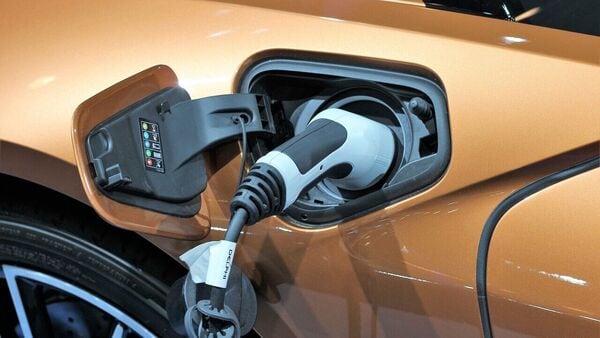
India’s electric-vehicle (EV) makers are beginning to answer a question that has shadowed the industry for years: can EVs make money? The ongoing earnings season suggests they can, as rising sales and maturing products improve economics and ease the financial burden of scaling up.
Mint takes a look at how the industry seems to have reached a critical point from where EVs have a clear path to make money.
The latest earnings season offers fresh evidence that electric vehicles can make money. Ather Energy reported its first-ever net profit in fiscal second quarter (Q2FY27), while Bajaj Auto said its electric scooters and three-wheelers are generating double-digit positive Ebitda margins, helping cushion the impact of the West Asia war.
Tata Motors Passenger Vehicles and Mahindra & Mahindra have previously reported positive margins from their EV businesses, suggesting that scaling up electric vehicles may no longer be a significant drag on automakers’ balance sheets.
Three factors are driving the shift: rapidly rising sales, maturing products that require less investment in development and distribution networks, and government subsidies.
EV adoption has accelerated since the onset of the West Asia war, with penetration in passenger cars crossing 8% in recent months, up from nearly 5% at the end of March, according to data from the Federation of Automobile Dealers Associations (Fada). In two-wheelers, penetration has exceeded 11%, compared with around 6.5% at the end of March. Rising volumes and stabilizing product costs are helping manufacturers improve margins.
As electric vehicles become less of a financial drain, manufacturers, particularly listed companies, may be more willing to commit capital to expansion, with clearer prospects of returns for shareholders.
Tata Motors PV, Mahindra and Mahindra, , , TVS Motor and Ather are expanding capacity for making electric vehicles as they lose less money on selling EVs and begin to gain on both top and bottom line owing to the rapid rise in sales of EVs.
Government subsidies across vehicle categories are nearing expiry. The Centre’s PM E-Drive and production-linked incentive schemes have around two years remaining, while state-specific incentives have become less common. Ather, which has not received any benefits from the Production-Linked Incentive scheme, has nevertheless turned profitable, suggesting that viable unit economics are possible without substantial scheme-specific support.
With government support expected to wind down within the next two years, industry executives say manufacturers must accelerate efforts to make their EV businesses financially sustainable.
A key reason EVs remain less profitable than their internal combustion engine (ICE) counterparts is the lack of a domestic battery-cell ecosystem, leaving manufacturers reliant on imports, largely from China. Technology development has also required substantial investment, but as products mature, manufacturers can focus more on controlling costs.
Over the next four years, Indian companies including Exide Industries, , and are expected to begin domestic cell production, potentially lowering costs and improving EV margins over time. Ola Cell Technologies has already commissioned a 6GWh cell-manufacturing plant as domestic capacity expands.