



As Brazil goes to the polls on Sunday (October 3), will the country join the “rightward shift” seen in Latin America in recent years?
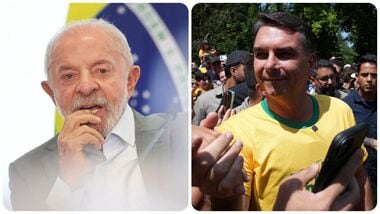
The election in Brazil has been deemed “deeply polarising” as voters choose between two starkly different visions for the country proposed by leftist President Luiz Inacio Lula da Silva and right-wing senator Flavio Bolsonaro.
Incumbent President Luiz Inácio Lula da Silva and his challenger, Flavio Bolsonaro, the son of former President Jair Bolsonaro, are the frontrunners in Brazil’s presidential election on Sunday.
Polls showed Lula and Flavio in a neck-and-neck fight. Reuters reported that an October 25 runoff is likely.
In Brazil, Lula’s victory is expected to keep the country a major leftist bastion in the region, alongside Mexico, while a Flavio Bolsonaro win would see the country join the rightward-shifting tide.
The battle in Brazil comes as Latin America has swung sharply to the right in recent years.
Right-wing candidates and conservative allies of US President Donald Trump won seven major presidential elections in Latin America in the past few years, most of them since Trump’s inauguration in January 2025.
Here is a look at the Latin American countries that elected conservative presidents recently:
Trump-endorsed Abelardo de la Espriella secured a narrow victory in Colombia’s June presidential election. A lawyer and business owner, Espriella pledged to reduce the size of the state, broaden the tax base, cut corporate taxes and restart oil exploration.
De la Espriella is nicknamed “The Tiger.” His election marked a pivotal moment for Colombia, which was governed for the past four years by a former member of a rebel group, who was critical of the Trump administration’s immigration and anti-drug policies, the Associated Press reported.
In Peru, Conservative Keiko Fujimori secured victory in a razor-thin June race. Ratings agency Moody’s said a Fujimori government would preserve policy continuity, bolster investor confidence and boost economic growth.
A business-friendly conservative politician who campaigned on a tough-on-crime platform, Fujimori is the daughter of late former President Alberto Fujimori, whose government defeated the Shining Path violent extremist group in the 1990s but also took an authoritarian turn.
She took office in July. According to AP, she promised to build four new prisons, including a mega-prison modeled after El Salvador’s CECOT facility, militarise Peru’s borders to curb drug trafficking and deport migrants working in the country without legal residency.
Javier Milei, nicknamed “The Lion,” won Argentina’s presidential election in November 2023 by promising to slash government spending and tackle the South American nation’s decades-long inflation problem.
An economist and television commentator, Milei has reportedly stopped the nation’s central bank from printing money to finance the government deficit and has cut government spending by firing civil servants and halting investment in public infrastructure programs, while reducing subsidies for public utility bills.
Daniel Noboa winning the election in Ecuador with 56 percent of the vote, and was reelected to a four-year term in April 2025.
A member of one of Ecuador’s wealthiest families, Noboa has given the military a more prominent role in providing security in coastal cities overrun by drug gangs fighting over the control of ports and drug trafficking routes. But the strategy has not substantially reduced homicide rates.
Under her watch, Ecuador’s military started to conduct joint operations against drug traffickers with the US Noboa also pushed for the reopening of a US military base in Ecuador, but the proposal was struck down in a referendum last year.
Nasry Asfura narrowly won the presidential election in Honduras in November, defeating his closest rival by less than a percentage point.
A real estate investor and former city mayor of the National Party, Asfura belongs to the same party as former President Juan Orlando Hernández, who was pardoned by Trump for a drug trafficking conviction.
Asfura was endorsed by the US president, who threatened to cut off aid to the small Central American country if Asfura was not elected.
José Antonio Kast, a conservative and a devout Catholic, won Chile’s presidential election in December 2025, defeating a progressive government that had been in power for the previous four years.
In his campaigns, Kast capitalised on fears over increasing crime rates in Chile and said he would expel migrants from countries like Venezuela and Haiti who had been working in Chile without residency permits.
One of his first moves after taking office has been to expand a trench along Chile’s borders with Peru and Bolivia in a bid, his government says, to stop drug trafficking and migration.
Laura Fernández won Costa Rica’s election in February with 48 percent of the vote, defeating her closest rival by 15 percentage points and surpassing the 40 percent of votes needed to avoid a runoff election.
She was an economy minister under conservative ex-President Rodrigo Chaves.
The winner of the Brazilian elections will determine Brazil’s foreign policy.
Flavio Bolsonaro’s father and far-right former President Jair Bolsonaro is an ally of US President Donald Trump.
Meanwhile, Lula, who at 80 is one of the world’s oldest heads of state, is running in his seventh presidential election and has strengthened Brazil’s ties with China.
Notably, Lula has accused the Trump administration of using tariffs and other means to interfere with Brazilian affairs. Bolsonaro has portrayed Trump as an ally, and is expected to strengthen ties with Washington if elected.
The Trump administration has imposed tariffs on Brazilian products and sanctions on judges and other officials.
If Leftist Lula wins, Washington will likely continue resorting to threats and targeted tariffs to curb ties with China, Regiane Bressan, a professor of International Relations at the Federal University of Sao Paulo, told AFP.
The US is Brazil’s second-largest trading partner, behind China.
A Flavio Bolsonaro presidency would have more alignment with Washington, “at least rhetorically,” said Bressan.
The latest Latinobarómetro poll, taken in 17 countries and published exclusively by The Economist, showed that Latin Americans’ views of the United States have soured since Trump came to power.
The share with a favourable opinion fell from 73 percent in 2024 to 63 percent, the report published on September 30, 2026, claimed.
The poll revealed that, for the first time in a historically pro-American region, Latin Americans view China’s influence in a better light than America’s: 65% call it positive, compared with 57% for the United States.
“This reflects Mr Trump’s aggressive stance towards a region he believes his country should dominate,” the report added.
Will this mean Leftist Lula’s comeback in the 2026 Brazilian elections? The next president will be known once the results of the ongoing polls are released.
The electoral court (TSE) will start publishing results at 5 pm Brasília time on Sunday, October 4, 2026, as soon as polling places close. A runoff between both is expected on October 25, if neither passes 50 percent of votes. Sunday’s results will offer the first real measure of the candidates’ support beyond polls.