



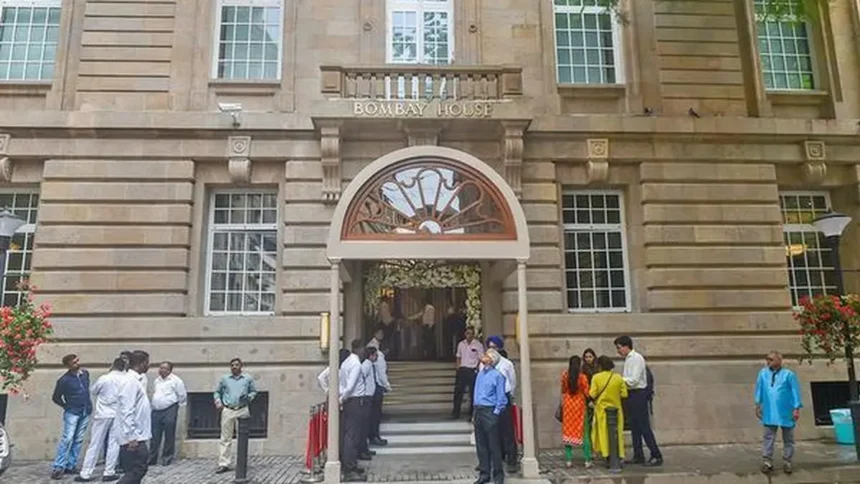
Tata Sons has defended the re-appointment of its Chairman N Chandrasekaran for a third term, stating that the resolution was validly passed.
Tata Sons justified the action in its response to Tata Trusts Chairman Noel Tata, who had called the resolution appointing Chandrasekaran illegal.
While Tata obtained Justice (retired) D.Y. Chandrachud’s view, Tata Sons has relied on legal opinions from retired Supreme Court judges B.N. Srikrishna and Uday U. Lalit to buttress its claims.
Article 121 of Tata Sons’ Articles of Association states that appointment of the Chairman of the board requires an affirmative vote of a majority of Trust-nominated directors present at the meeting. In case of an equality of votes, the Chairman will have the casting vote.
Justice Lalit has opined that in the present case, out of five members of the board who cast their vote on the proposal, except Noel N. Tata, the other four members had voted in favour of grant of chairmanship to Chandrasekaran. Since there was equality of votes among the Trust-appointed directors, the presiding or officiating Chairman, by putting his casting vote, satisfied the requirement under Article 121.
While Justice Chandrachud is of the view that a casting vote exercised by the Chairman cannot supply a missing affirmative vote, Justice Lalit takes a different stance. Justice Lalit said there was certainly an occasion for the Chairman to have a casting vote as there was an equality of votes among Trust-nominated directors. “In my view therefore, the resolution dated September 17, 2026 for approving the agenda was validly passed,” he said.
Justice Srikrishna opines that the board’s action is perfectly consonant with the letter and spirit of Article 121. “In my opinion, the proceedings before the board were not intended to be deadlocked in any event, and that is why it is necessary to read this article in a manner so as to ensure that the proceedings before the Board and the querist’s business are taken forward and satisfactorily concluded,” he said.
He further added that every director has two duties – one his fiduciary duty to the company under the Companies Act and the other to the nominating entity. “There is no doubt that the former duty must override the latter in case of a conflict. That is because the former duty is statutory and the latter is only contractual. In the circumstances Venu Srinivasan (Tata Trusts nominee) rightly acted pursuant to the statutory fiduciary duty,” he said.
Published on September 24, 2026