



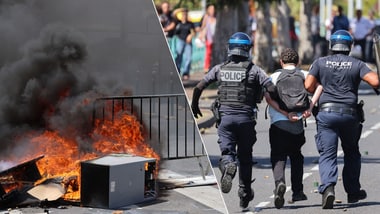
Around 400 secondary schools across France were closed on Friday, 2 October, as a rapidly expanding student protest movement over education conditions escalated into clashes, fires, and blockades.
The closures affect roughly 400 of France’s 3,700 high schools, with the Education Ministry saying classes at affected would move online where possible. Education Minister Edouard Geffray said the decision was primarily intended to protect students and staff after violence was reported at several schools.
The protests began in the Paris region in late September and have since spread to cities including Marseille, Strasbourg, , Rennes, Lille, and Nantes. Students have been blocking school entrances and demanding more teachers, smaller classes, better-maintained buildings and greater resources for schools.
Their complaints are not just limited to . Students have also raised concerns about long school days, classrooms becoming excessively hot during periods of high temperatures, inadequate facilities, and buildings in urgent need of repair.
At a school in Strasbourg, one 17-year-old student told AFP that classes could have as many as 35 pupils, while some rooms had water leaks and the was too small. The student also complained of a lack of resources and supervisors.
The scale of mobilisation grew sharply this week. According to Le Monde, more than 1,020 schools were affected by strikes or protests on Thursday, including 222 blockades, although not all of those schools were closed. The newspapers reported that nearly 1,950 people were arrested on Thursday as some demonstrations descended into violence.
While the movement began with demands over education, several demonstrations have since involved clashes with police and to public property.
In Strasbourg, tear gas was used as police confronted protesters, while fireworks were reportedly directed at police lines in . Rubbish bins were set on fire in Rennes and other cities. In Nantes, a fire damaged a school entrance, while authorities in Marseille reported fires at two schools.
One of the most serious incidents was reported at Marseille’s Saint-Exupery high school, where a group surrounded a fire engine responding to a blaze and forced firefighters away before setting the vehicle on fire. At another school in the city, a teacher was reportedly splashed with petrol during an incident involving protesters.
The violence has also created tensions over policing. French authorities said investigations had been opened into allegations of involving police, after students were reportedly injured by riot-control measures. Le Monde reported that, according to Geffray, 65 education staff and 170 students had been injured since the movement began.
Prime Minister Sébastien Lecornu convened an emergency meeting on Thursday and asked ministers to cancel planned travel so they could focus on the .
The government has also moved to restrict demonstrations around schools that were due to remain closed on Friday.
Geffray said the students’ original grievances were legitimate, but argued that had taken control of parts of the movement. He announced meetings with student and parent organisations, staff unions and representatives of high school students as the government attempts to reopen dialogue.
The protests have also collided with a difficult budget debate. The government unveiled its 2027 budget proposal this week as it seeks to reduce ‘s deficit, with spending restraint becoming a major source of tension. Reuters reported that the planned 1.7% education budget increase falls below , fueling criticism that schools will not receive enough funding to address staffing and infrastructure problems.
For now, the immediate priority remains in keeping the students and staff safe. But the continued closures show that the dispute has moved beyond isolated school blockades, becoming a nationwide confrontation of the state of France’s education system.