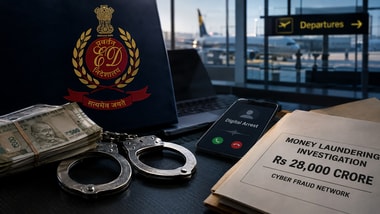
Rashesh Upadhyay, also known as Rashesh Shah, is an advocate who has been arrested by the (ED) in connection with an alleged nationwide cyber fraud and digital arrest network under investigation for suspected money laundering.
His arrest on Saturday, 24 October, came at Mumbai’s Chhatrapati Shivaji Maharaj International Airport, where an ED team from Panaji intercepted him at a boarding gate as he prepared to fly to . Customs officials and personnel from the Central Industrial Security Force (CISF) assisted the agency in locating him, according to a Press Trust of India report.
Upadhyay was subsequently taken to Panaji and produced before a special court under the Prevention of Money Laundering Act (). The court remanded him to ED custody until 29 October. His arrest takes the total number of people held in the investigation to seven.
The case centres on an alleged cybercrime network whose accounts were linked to banking transactions worth nearly ₹28,000 crore and cash deposits of approximately ₹2,900 crore, according to the ED.
While seeking his custody, the ED described Upadhyay as a “key node” in the alleged network. The agency told the court that he had allegedly helped secure the release of bank accounts linked to the suspected operation after led to their being frozen.
According to the ED’s allegations, he arranged bribes for officials through angadiyas, a network of private cash intermediaries. Investigators are examining the identities of the officials who allegedly received payments and the role played by other intermediaries.
The agency also alleged that although Upadhyay had enrolled as an advocate, he had not appeared or filed a vakalatnama, the document authorising a to represent a client, for the accused individuals or companies associated with the network.
These are allegations made during an ongoing investigation. The arrest and remand do not establish guilt.
The investigation began after registered a first information report on June 9, 2025. The case followed allegations that a woman from Goa had been placed under “digital arrest” by cyber fraudsters and coerced into transferring ₹2.60 crore between May 21 and June 2 that year.
The ED said the money was routed through around 400 mule accounts associated with commodity, travel and foreign exchange companies allegedly operated through dummy directors. The funds were then withdrawn in cash and converted into foreign currency through money changers licensed by the .
The investigation has since expanded well beyond the original complaint.
digi
Digital arrest scams involve impersonating police officers or other law enforcement officials during phone or video calls. They threaten victims with supposed criminal proceedings and pressure them into transferring money, sometimes keeping them on calls for extended periods to prevent them from seeking help.
There is no legal process in India by which someone can be arrested through a video call. The government advises people who encounter suspected cyber to report it through the national cybercrime helpline, 1930, or the official portal, cybercrime.gov.in.