



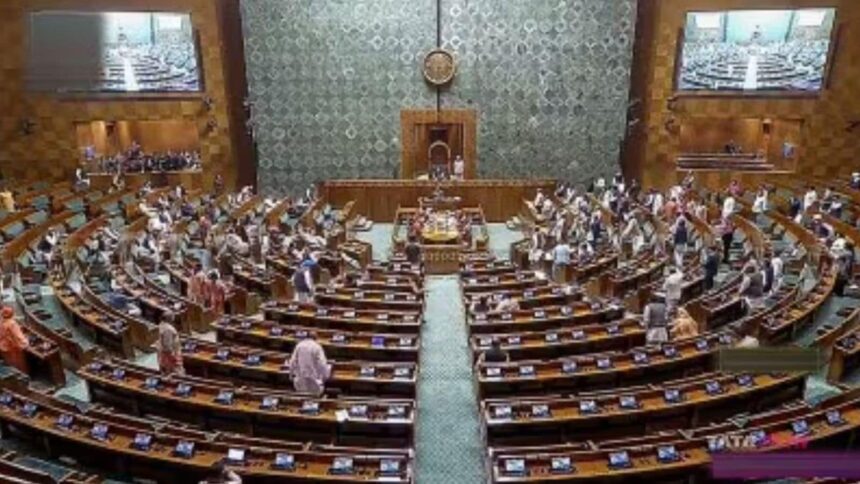
India’s parliamentarians raised 170 disability-related questions across three sessions in 2025, but of the 208 MPs who engaged with the issue, 76 per cent did so only once, with an overwhelming focus on rehabilitation and social protection. These were the findings of a first-of-its-kind report, titled ‘Purple Sabha: State of Disability in Parliament’, launched Monday.
The novel report tracked and analysed every disability-related question raised in Lok Sabha and across the , Monsoon and Winter sessions in 2025. It found that 208 MPs from 23 states asked 170 questions.
However, of 208 MPs, 158, or 76 per cent, raised exactly one question throughout the year. “This single-question majority is the dataset’s starkest structural finding: parliamentary engagement with disability is wide but shallow, driven by a small cohort of repeat contributors, rather than broad-based member commitment,” the report stated.
The report was prepared by the Politics and Disability Forum, a New -based research and advocacy organisation working at the intersection of political rights and disability policy. It was produced in partnership with the Centre for Parliamentary Studies at the National Law Institute University (NLIU), .
An analysis of the questions showed that the Ministry of Social Justice and Empowerment (MoSJE) received 60 per cent of all questions. The report flagged this as a narrow imagination of disability as a welfare problem, rather than a rights framework.
MoSJE is the nodal ministry which oversees and supervises the implementation of the , through its Department of Empowerment of Persons with Disabilities.
Twelve ministries with clear obligations under the RPwD Act, 2016, including large ministries such as Agriculture, Rural Development, Housing, and Tribal Affairs, did not receive a single disability-related question through 2025.
“The disability dimensions of law, housing, rural employment, corporate governance, and digital infrastructure remain below Parliament’s accountability horizon,” the report stated.
India has an estimated 2.68 crore persons with disabilities (PwDs), who are identified across several categories under the RPwD Act. The RPwD Act, 2016, is the principal legislative framework governing disability rights in India, and it gives effect to the United Nations Convention on the Rights of Persons with Disabilities.
Moreover, a thematic analysis showed that areas such as independent living, women with disabilities, disaster preparedness, electoral accessibility, and private-sector compliance were entirely absent from parliamentary engagement. Geographically, too, the report flagged gaps. Nine states, including five of the seven northeastern states, raised zero disability-related questions.
“The Northeast contributes only 3.5% of total questions; 6 out of 170…a critical gap given the elevated presence of RPwD Act-recognised conditions (sickle cell, intellectual disabilities, conflict-related physical disabilities) in tribal populations of the region,” the report flagged.
The report recommended that MPs raise questions on issues that remain ignored or unaddressed, such as the living conditions of PwD, and on the obligations of other important ministries that are currently not questioned on this issue.

