



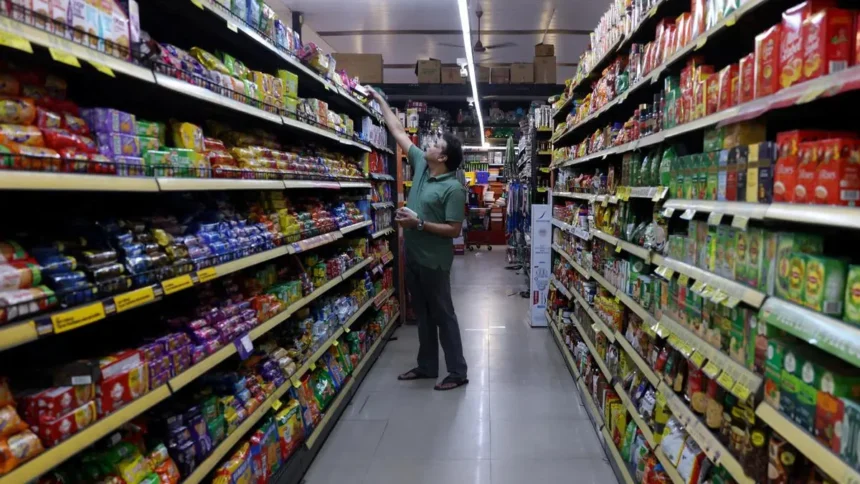
Strong demand is keeping FMCG industry growth on track in Q2 FY27, but raw material costs are creating sharply divergent margin outcomes. Analysts say the gap could widen in the second half, as the weakest monsoon since 2015 threatens rural demand and introduces fresh input-cost risks.
Marico has the clearest advantage, as copra, the key input for its flagship Parachute Coconut Oil, remains about 35 per cent below its peak, supporting gross-margin expansion. The brand contributes approximately 35–36 per cent of Marico’s domestic revenue and about 27–28 per cent of its consolidated turnover.
Dabur India and Godrej Consumer Products (GCPL), by contrast, are grappling with inflation in crude, palm and other commodity-linked inputs, while Honasa Consumer is benefiting from scale gains and operating leverage. The weak monsoon, meanwhile, poses an additional risk to both rural demand and input costs in the second half.
Marico expects operating profit to grow in the mid-twenties as underlying India volumes reach double digits. GCPL expects high-teen revenue growth and double-digit EBITDA growth despite inflationary pressures. Dabur expects double-digit revenue and profit growth even though higher costs are likely to weigh on operating margins, while Honasa expects early-thirties net sales value growth and an early double-digit operating margin.
Brokerage assessments point to the same divide: demand remains resilient, but raw material exposure, pricing power and cost management are increasingly determining how effectively revenue growth translates into earnings.
Parachute Coconut Oil volumes grew in the early teens, while Value-Added Hair Oils expanded in the twenties. Although costs of crude-linked derivatives increased, lower copra prices are driving a strong year-on-year (y-o-y) improvement in gross margins.
Broking firm Nomura said lower copra costs and strong volumes could drive consolidated EBITDA growth of about 25 per cent y-o-y despite higher advertising spending. Jefferies and Morgan Stanley said Marico’s copra exposure provides a margin cushion compared with peers contending with crude- and palm-linked inflation.
Saffola Oils volumes declined as Marico prioritised profitability over lower-margin growth.
The weak monsoon could complicate the second half, despite Dabur’s domestic FMCG business returning to double-digit growth, its strongest performance in recent quarters, led by high-teen growth in hair oils and shampoos.
The south-west monsoon ended at 87 per cent of the long-period average, its weakest since 2015, prompting PhillipCapital to flag risks to farm output, rural sentiment and, with a lag, consumption. Dabur’s sizeable rural exposure adds to pressure from elevated inflation in its Home & Personal Care and OTC & Ethicals segments, making margin expansion heavily dependent on price hikes and cost-saving measures.
GCPL faces a similar demand risk, particularly in household insecticides, where weaker rainfall can depress consumption even as input costs rise. The company expects high-single-digit underlying volume growth and high-teen consolidated revenue growth. However, crude-linked derivatives, palm oils and other inputs turned inflationary during Q2, while trade inventory correction could shave 100–150 basis points off standalone growth. Morgan Stanley flagged these near-term pressures, although Macquarie noted that GCPL has maintained its FY27 guidance for double-digit EBITDA growth.
The rainfall impact could also extend to raw materials. Deficient rains in coconut-growing southern States could eventually erode Marico’s current copra-cost advantage, potentially reducing one of its key margin tailwinds in the second half. Honasa, with its greater urban and online exposure, remains relatively less vulnerable to weaker rural demand.
Honasa expects early-thirties net sales value growth and an early double-digit operating margin. HDFC Securities and Systematix said growth in newer brands and expanding offline distribution are improving scale efficiencies and operating leverage.
Q2 guidance therefore points to healthy demand but increasingly divergent profitability dynamics: input costs are shaping margins today, while the monsoon could make the growth equation more challenging in H2.
Published on October 6, 2026