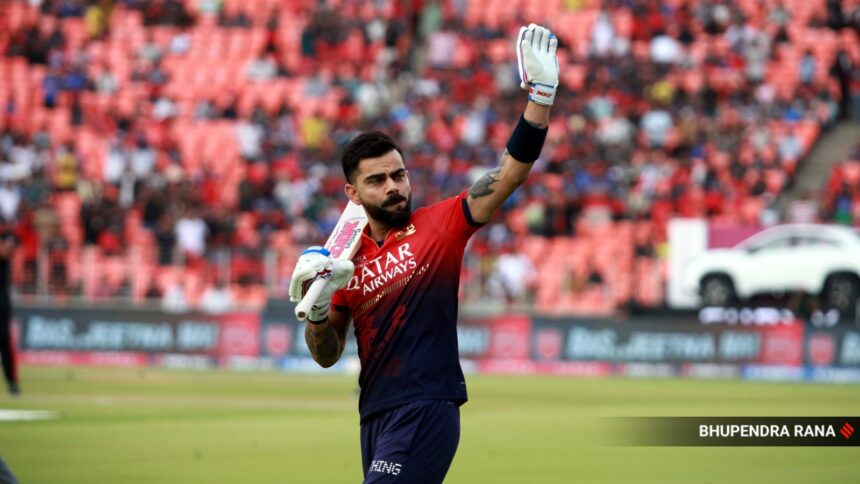
Fitness conversations in India often revolve around cricket, largely because of the sport’s massive popularity and the visibility of athletes associated with it. But a recent remark by cricketer Virat Kohli has shifted attention to another demanding sport — hockey — and the physical standards it demands. Widely regarded as one of the fittest cricketers of his generation, Kohli surprised many by openly acknowledging that even cannot be directly compared with the physical demands placed on hockey players.
Speaking at the Innovation Lab Indian Sports Summit, Kohli stressed that fitness should simply be part of the job rather than something extraordinary. “I know people sometimes look at fitness as something extraordinary, but for me, it is what the job demands. It should be the norm, not something celebrated as special,” Kohli said.
DISCLAIMER:
He also pointed to how cricket often dominates public attention, which can overshadow the demands of other sports. “Cricket is in such prime focus in our country that we often overlook other sports. If I am being honest, we aren’t even 15% of the fitness of an Indian hockey player. If the hockey players watch our training sessions, they would laugh because their sport demands far more,” Kohli added.
His comments sparked appreciation from the hockey community. According to Hockey India, vice-captain Hardik Singh added, “The man who redefined fitness is acknowledging our standards, which sends a message that the fitness of the hockey players should not be underestimated.” Indian captain Harmanpreet Singh also highlighted hockey’s intense pace, saying, “It is great to have our fitness level in front of the world as hockey is one of the fastest games.”
Dr Vajjala Shravani, MPT (Cardiovascular) and Founder Tone 30 Pilates, tells indianexpress.com, “Cricket is fundamentally an intermittent, skill-dominant sport characterised by short, explosive bursts of maximal effort punctuated by prolonged periods of low intensity or rest. A batsman or fielder might execute a maximal 20-meter sprint requiring immediate ATP-PC (adenosine triphosphate-phosphocreatine) energy system output, but they are generally afforded recovery windows between deliveries or overs. Fast bowlers experience immense eccentric structural stress—loading several times their body weight onto their front foot during landing — which demands highly specialised core, spinal, and relative force strength. However, their is rarely pushed to its limits during a standard match.”
She continues, “Field hockey, conversely, is an anaerobic-aerobic hybrid sport. Played across four quarters, totalling 60 minutes on a massive pitch, it forces athletes into high-intensity intermittent work with tight recovery windows. Players accumulate massive distances, frequently sprinting while bent over, placing a continuous isometric workload on the lower back, glutes, and quadriceps.” The aerobic system must be highly developed to quickly clear metabolic byproducts like lactic acid during brief rolling substitutions, while the anaerobic glycolytic system is repeatedly stressed by fast breaks and defensive transitions.
Sadhna Singh, Food Science and Nutrition Expert, Gangtok, Sikkim, states, “Hockey and cricket require very different nutrition strategies. Hockey’s high-intensity play rapidly depletes glycogen, demanding high carbohydrate intake, quick hydration, and fast post-match recovery. Cricket relies on steady energy release, targeted protein for muscle repair, prolonged hydration under heat, and anti-inflammatory foods to aid recovery after extended play.”
Ordinary fitness seekers can improve metabolic health, fat loss, and lower-body power by incorporating hockey-style training. “Add shuttle runs with controlled deceleration for joint strength, interval training with 1:1 or 1:2 work-to-rest ratios for endurance, and unilateral movements like lateral lunges and skater hops to build agility, balance, and functional strength,” says Dr Shravani.
“You do not need to be an elite athlete to benefit from structured fuelling,” confirms Singh. She continues, “Match food intake to activity levels: increase carbohydrates on intense workout days and prioritise protein, healthy fats, and vegetables on lighter days. Eat balanced for steady energy, use simple carbs and fluids for longer activities, and prioritise protein plus carbohydrates after exercise to support recovery and tissue repair.”
DISCLAIMER: