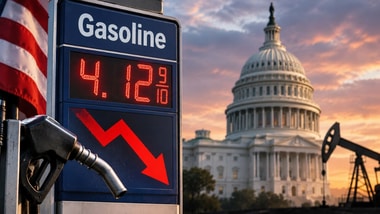
US motorists could get some relief from high gasoline prices in the coming days as a sharp decline in crude oil following the midterm elections raises hopes of an end to the war in Iran. The prospect of lower fuel costs comes after rising prices became a major concern for voters and contributed to the Republican Party’s losses.
US President acknowledged that the cost of gasoline had become a political liability for his party. Reflecting on the election outcome in an interview with Fox News, he said voters were reluctant to bear the higher fuel costs resulting from the conflict, even if they supported his stated objectives in Iran.
Trump described the increase in gasoline prices as a short-term consequence of the war, arguing that it could deliver longer-term gains. However, the electoral setback has intensified scrutiny of his administration’s approach to the conflict.
The immediate impact has been visible in energy markets. fell 8.3% on Wednesday to below $100 a barrel, while US benchmark West Texas Intermediate (WTI) declined by a similar margin to around $88.12. NBC News reported that the fall could soon translate into lower prices at petrol stations.
The national average price stood at $4.12 a gallon on Wednesday morning, according to NBC News. That was around 39% higher than the level before the US and Israel launched their military campaign against Iran on February 28.
Patrick De Haan, head of petroleum analysis at GasBuddy, told NBC News that the decline in crude prices could bring the national average gasoline price below $4 a gallon in the days ahead.
The pressure on American motorists was already evident on election day. Bloomberg reported that the average US gasoline price reached $4.13 per gallon on November 3, according to GasBuddy data. De Haan described it as the highest average recorded for any US election day.
Prices had previously crossed $4.56 per gallon in May and approached $4.50 per gallon in late September, according to AAA data cited by Bloomberg.
The $4 threshold has particular significance for consumers, even though gasoline prices remain below their 2022 peak after adjusting for inflation. Bloomberg noted that the persistence of prices above this level had made fuel affordability a prominent issue during the election campaign.
The conflict disrupted energy shipments through the Strait of Hormuz, a critical passage for global oil trade, and contributed to higher fuel costs in the US. The increase added to pressure on household budgets and businesses already dealing with elevated living expenses.
The issue featured prominently in the midterm campaign, with Democratic candidates highlighting the cost of living and higher fuel prices. In an NBC News exit poll, 59% of voters said they were very concerned about the cost of gasoline and diesel.
Vice President JD Vance also linked the Republican Party’s electoral losses to the war. In a social media post, Vance said the conflict was the reason the party had lost.
The election outcome could make it harder for Trump to sustain the current military campaign. Bloomberg reported that Democratic control of both chambers of Congress gives the party greater influence over government spending and the ability to pressure the administration on its war policy.
However, the political setback does not guarantee an immediate end to the conflict. The Associated Press reported that Trump has several options, ranging from maintaining the current military posture to launching further strikes or pursuing a diplomatic arrangement with Tehran.
Any renewed escalation could reverse the recent decline in oil prices and prolong the pressure on American consumers.
The impact of the energy crisis extends beyond gasoline. Diesel, which powers much of the country’s freight and agricultural transport, has become an even bigger concern for businesses and consumers.
According to Bloomberg, the average US diesel price was $6.29 a gallon on Monday, just 24 cents below the record high reached in September. The report also highlighted exceptionally low diesel inventories, with supplies at their weakest level for this time of year.
NBC News reported that US diesel futures fell nearly 7% on Wednesday, reaching their lowest level since the end of August. The decline could eventually ease costs for transport operators and other businesses, although the extent of relief will depend on how quickly lower wholesale prices feed through to consumers.
Diesel costs are particularly important because they affect the transportation of everyday goods, including groceries. A prolonged increase can therefore raise costs across supply chains and contribute to higher consumer prices.
The near-term outlook for fuel prices will depend on developments in the Middle East. Tom Kloza, chief energy adviser at Gulf Oil, told NBC News that seasonal conditions generally favour lower gasoline and diesel prices over the next six weeks. He suggested that prices could ease further by the second half of December if the US and Iran avoid further escalation.