


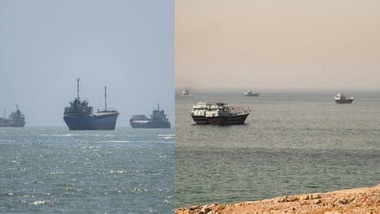
US and Iranian negotiators in New York are discussing a phased arrangement that could see Tehran restore shipping through the Strait of Hormuz in exchange for Washington easing its economic blockade, according to Reuters citing sources familiar with the talks.
Hormuz has emerged as a key point of leverage in efforts to bring the nearly seven-month conflict to an end. Iran wants relief from US economic pressure, while Washington is seeking the resumption of unrestricted maritime traffic through the vital global oil .
The negotiations remain difficult because neither side is willing to give up its bargaining power first, according to Iranian, regional and Western diplomatic sources cited by Reuters. At the same time, Iranian officials acknowledge the growing economic impact of maintaining the confrontation.
A senior Iranian official mentioned a step-by-step agreement could provide a way forward, with reopening the waterway as Washington lifts its economic blockade. Such an arrangement could also potentially allow Iran to regain access to frozen asset.
“One way forward would be to solve the crisis in stages. The first would be to end the blockade and reopen ,” he said on the sidelines of the UN General Assembly.
That would involve US Presidentaccepting another temporary fix, after an earlier understanding collapsed in July. So a central challenge facing the negotiators is not just to sketch out a deal but also to ensure any concessions are durable enough for both sides to trust, the sources said.
Trump has said he thinks the US and Iran could reach a deal after midterm elections to Congress on November 3. A senior European official said the Iranians “have a very long list of demands.”
A White House official said that while “Iran is desperate for a deal, President Trump holds all the cards and will make whatever decision is best for the United States.”
Trump, he said, remained “open to talking with Iran under the right circumstances” but had no need to negotiate, and the US was in a “very strong position” with control of the Strait of Hormuz and an Iranian economy that was “collapsing.”
The official said “crushing sanctions” and “one of the most successful blockades in history” have crippled Iran’s economy and left Iran completely broke. Trump was content to let the “inevitable Iranian collapse” play out rather than be “played” by Tehran, the official said.
Former US negotiator Dennis Ross said he saw only a 30% chance of an agreement being reached before the vote, but that both sides may have stronger reasons to make a deal before than after the midterms.
“The blockade is what’s really squeezing the Iranians. It’s strangling them,” Ross said.
A deal before the midterms could reportedly benefit Trump, as reopening Hormuz could ease tensions in the Gulf, contain oil prices and help bring down politically sensitive gasoline prices.
Iran’s chances of gaining much-needed economic relief may be greater while Trump still has a greater political incentive to strike a bargain.
After the midterms, Ross said, Trump may face fewer constraints and be more willing to intensify pressure or consider military options.
The leverage that brought Washington and Tehran back to negotiations could also make compromise harder.
Washington controls the pressure that is hurting Tehran most, while Tehran controls access to a critical energy chokepoint. Neither side wants to surrender that leverage without extracting something tangible in return.
This means the midterms may be less a deadline for diplomacy than for preserving the conditions that make the diplomatic efforts possible. If Washington and Tehran cannot turn leverage into a deal before the midterms, the diplomatic window could narrow as the risk of escalation grows.
Even as it seeks a diplomatic off-ramp, is preparing for the possibility of renewed war with Washington, the Iranian official said, accusing the US of using the economic blockade and threat of force as tools of coercion.
“Our fingers are on the trigger. The Americans know what they need to do but, because of their excessive demands, the chances of diplomacy resolving this are extremely low,” the senior Iranian official stated.
Regional sources said Iran was prepared to move its demand for transit fees on vessels using the Strait of Hormuz out of the main agreement and place it in a separate document, as securing an end to the blockade had become a more immediate concern.
Gulf countries have opposed any proposal involving transit payments. Regional officials said any compromise on the issue would be temporary and would not amount to Tehran abandoning its broader position.
The US has intensified economic pressure on Iran by imposing additional sanctions alongside the blockade, which has severely restricted the country’s oil exports and access to crucial foreign currency.
Washington this month also sanctioned Iran’s remaining commercial airlines and related support networks as part of efforts to cut off economic channels that support the government and the Islamic Revolutionary Guard Corps. Trump warned that Iran’s economy could “rot” if Tehran failed to reach an agreement.
“Iran is not primarily focused on imposing tolls in Hormuz but on preserving its administrative control of the waterway. Iran may be willing to defer the toll issue, but they are not going to give up administrative control of the strait,” he said.
The negotiations in New York reflect a wider disagreement between the parties: Washington is seeking to use economic pressure to secure concessions, while Tehran wants those restrictions eased before making concessions. Gulf countries, meanwhile, are seeking an end to the conflict without allowing strategically important waterways to become permanent tools of negotiation.