


The new (MDR) framework announced by the central government and the NPCI, which will carry a charge of 0.4% MDR for merchants on transactions above ₹5, has led to pushbacks from industry associations, with some local traders in several parts of the country threatening to not accept UPI payments above ₹2,000 if the charges are not revoked.
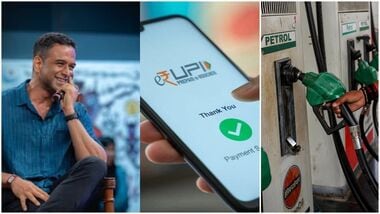
Petrol pump dealers in Mumbai have warned that they may stop UPI payments above ₹2,000 from 15 October if the central government foes not exempt fuel retailers from the 0.4% MDR, NDTV Profit reported.
This comes despite the government having put fuel in the ‘essential/thin margin’ category, which will not attract 0.4% MDR, and instead will face a flat ₹5 charge on any transaction above ₹2,000.
Not only petrol pumps, but other organised bodies of traders have also raised objections about the new charges for UPI usage.
The Retailers Association of India on Wednesday said that this move could encourage merchants to opt for cash payments instead of UPI.
“Small merchants will now think twice about whether to accept cash or UPI,” RAI chief executive Kumar Rajagopalan said in a statement as per Reuters.
He added that a high volume of transactions will be above ₹2,000, especially during the upcoming festive season, and this will make cash “the path of least resistance” for those retailers operating on thin margins.
A public-interest litigation (PIL) has also been filed in the seeking suspension of the new framework, arguing that the same was introduced without required statutory authority, transparency, or safeguards for consumers or merchants.
The Clothing Manufacturers Association of India has also slammed the move, saying that it could not have come at a “more challenging time”, Reuters reported.
The All India Consumer Products Distributors Federation (AICPDF) has written a letter to Prime Minister Narendra Modi in this regard, asking that zero-MDR UPI be continued for merchants.
“UPI is a service used by the entire economy, not by traders alone,” AICPDF national president Dhairyashil H Patil said, as per a Times of India report. “If there is a requirement to recover a portion of the cost of maintaining this enormous digital infrastructure, the government should examine a broad-based mechanism rather than making the merchant the sole payer,” he added.
In Ghaziabad, some merchants have already put up signs outside their shops saying “UPI payments will not be accepted” as a protest against the new charges.
Sectors like jewellery, consumer electorics, apparel or premium retail, travel bookings, insurance, stockbrokers, and petrol pumps are the most exposed to transactions greater than ₹2,000.
Zerodha CEO Nithin Kamath has warned in a social media post that the new framework could challenge the economics of the stock-broking business.
As per the new rules, capital-market transactions, which include payments to stockbrokers, mutual funds, as well as securities dealers, will attract a merchant fee of 0.02% of the total transaction value, capped at ₹300.
“If every UPI transfer starts carrying an additional cost, irrespective of whether the customer actually trades, I don’t see how we can absorb this indefinitely,” Kamath said.