



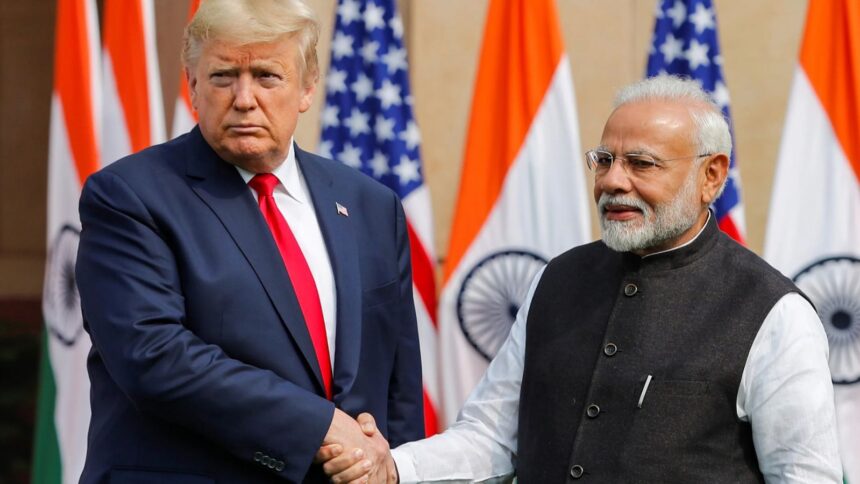
Underlining the importance of keeping the Strait of Hormuz open and secure, US President Donald Trump called up Prime Minister Narendra Modi on Tuesday, in what was their first conversation since the US and Iran announced ceasefire last week.
After the call, the Prime Minister posted on X, “Received a call from my friend President . We reviewed the substantial progress achieved in our bilateral cooperation in various sectors. We are committed to further strengthening our Comprehensive Global Strategic Partnership in all areas. We also discussed the situation in West Asia and stressed the importance of keeping the Strait of Hormuz open and secure.” And he tagged @POTUS and @realDonaldTrump after the post on X.
Received a call from my friend President Donald Trump. We reviewed the substantial progress achieved in our bilateral cooperation in various sectors. We are committed to further strengthening our Comprehensive Global Strategic Partnership in all areas. We also discussed the…
— Narendra Modi (@narendramodi)
While this was their first conversation since the April 8 ceasefire, the two leaders had spoken on March 24 — that was their first call since US and Israel attacked Iran on February 28.
The common thread between the March 24 and the April 14 call was that both times — Trump had called up Modi, and they had discussed the “importance of keeping the Strait of Hormuz open”.
On March 24, the day after Trump paused for five days his threat of striking Iran’s energy sites and announced initiation of talks behind the scenes with Tehran, the US President had called up Modi and discussed the situation in West Asia “including the importance of keeping the Strait of Hormuz open”.
With both sides underlining the importance of the Strait of Hormuz and keeping the waterway open, it signalled the concern over disruption in global energy supply chains.
The Strait of Hormuz is the key channel through which 20 per cent of the global energy supply – and majority of gas supply from Qatar – passes in large carriers. Qatar, UAE, Kuwait have all been negatively impacted by the closure of the Strait, and that has led to a global rise in prices of oil and gas, and impacted the supply of cooking gas in India and other countries.
The reference to the reviewing of bilateral ties and commitment to strengthening the strategic partnership reflects that the two leaders are working towards stabilising the relationship after the setback in ties over US imposing 50 per cent tariffs on India.
External Affairs minister S Jaishankar has also been in touch with US Secretary of State Marco Rubio, and Foreign Secretary Vikram Misri also met the US Secretary of State and NSA during his visit to Washington last week.
Rubio is planning to come to India next month and preparations are underway to schedule the Quad Foreign ministers’ meeting in second half of May.

