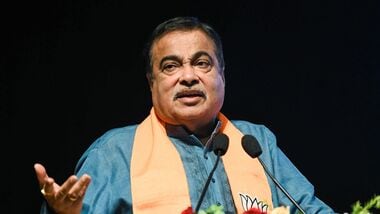
Union Road Transport and Highways Minister Nitin Gadkari announced that Toyota will launch a new bioethanol-powered Innova in India on 26 November. The next MPV will be 100% bioethanol-powered rather than petrol-powered and is expected to demonstrate an alternative way to cut fuel costs.
Speaking at the Powering the Next Mile conclave on Tuesday, 3 November, Gadkari said the vehicle could bring down the effective running cost to the equivalent of ₹25-30 per litre of petrol. He said the reduced operating costs were due to ethanol and electricity produced during the car’s operation. This is an effort by India to reduce its reliance on imported crude oil and adopt alternative fuel technologies.
In announcing the launch timeline, on 26 November. The car will run on 100% bioethanol, which is significantly different from the petrol-fuelled MPVs.
“This month, on 26 November, I am going to launch Toyota’s four-wheeler Innova, which will run entirely on 100% bioethanol instead of petrol,” Gadkari said at the conclave.
Bioethanol is made from biodegradable substances, such as waste and cultivated crops, and is an alcohol-based renewable energy. Its greater import into India can help the country reduce dependence on fossil fuel imports.
‘Ethanol was sold at about ₹75 a litre, while petrol was being sold at ₹120 a litre,’ said. He asserted that the Innova, to be released soon, would produce almost 60% of its electricity during operation.
According to the minister, the combination of bioethanol and electricity generation would significantly reduce the vehicle’s overall operating expenses. Its actual running cost could be as low as ₹25-30 per litre of petrol, he estimated.
However, the actual savings will depend on the vehicle’s fuel efficiency, operating conditions and the cost of bioethanol, he said.
In his speech, the minister also talked about the development of India’s electric two-wheeler industry. He recalled launching early electric scooters developed by and TVS, which offered a range of around 125 km.
Some manufacturers later scaled down the battery size to make electric scooters more affordable, bringing them to around ₹70,000-72,000, he added. This cut their range in half, though, to almost 70 km.
Gadkari reiterated the need to develop green, safe, and affordable mobility technologies. He has consistently advocated the use of electric vehicles, biofuels, and other non-petroleum fuels to reduce India’s dependence on imported petroleum.