



Ergo, crises of this magnitude often do more than disrupt; they force a strategic reset.
Present events are triggering a familiar rethink—a shift not just in routes, but in the very architecture of connectivity between Asia, the Middle East, and Europe. In that sense, the current turmoil may have revived a project many had already written off: (IMEC).
But not in its original form.
When IMEC was first announced with much fanfare at the G20 summit in New Delhi on 9 September 2023, it was framed as a timely, integrative, inclusive vision. Backed by the G-7 and supported by key Gulf states, it promised to connect India to Europe via the Middle East—linking ports on the west coast of India to the UAE, to overland routes through Saudi Arabia, onward to Israel’s Haifa port, and then to Europe, entering the continent via Piraeus in Greece.
The logic was reasonable. It aimed to create alternative trade routes, reduce dependency on traditional chokepoints like the Suez Canal and build economic and infrastructural interdependence among “like-minded” partners. It also drew on the broader political momentum generated by the , which sought to normalise relations between Israel and several Arab states, beginning with the UAE.
For New Delhi, this aligned well with its strategy of multi-alignment in the Middle East—deepening ties simultaneously with the Gulf, Israel and Iran—even though India’s tilt towards the Gulf, mainly the UAE and Israel, is pretty much key to Prime Minister Narendra Modi’s Middle East engagement.
But IMEC, as originally conceived, was always more vision than reality.
Operationally, it was a logistics nightmare—a patchwork of maritime and overland routes requiring multiple transitions and navigating different regulatory frameworks. The reliance on Haifa as a final node before entering the Mediterranean Sea brought additional vulnerabilities, particularly given the persistent threat of proxy conflicts.
Industry experts opined that de-risking finance for such a corridor in one of the world’s most volatile regions would pose challenges for private capital.
Then came the shocker everyone dreaded—the 7 October 2023 , the prolonged spiral of Israel’s war against the network of proxies, the of Bashar al-Assad in Syria and now the second broader war directly with Iran. In conferences across the world, diplomats, scholars and stakeholders have brainstormed on how to salvage this wonderful idea from its own operational limits and the attritional external wars.
What has become clearer is that IMEC 1.0 belonged to a geopolitical context that no longer exists.
The current Iran war has laid bare a fundamental reality: 20 per cent of global energy trade cannot afford to rely on a single artery, no matter how resilient and cost-effective.
Today, Hormuz is the strategic vulnerability and undoing for the rich Gulf countries and their customers across the world, especially Asia and Europe. As energy analyst Javier Blas has consistently highlighted, recent price volatility reflects not a structural shortage, but a supply shock amplified by uncertainty.
Oil has borne much of that brunt. Gas, for now, remains relatively stable, but that equilibrium remains fragile.
That adds depth to the real takeaway—future lies not in replacing one route with another, but in creating multiple, parallel nodes supporting each other.
This is where the idea of IMEC has re-acquired the space to evolve.
The original vision of a single, linear corridor is no longer sufficient and worth investing in. What is emerging instead is the need for a network of interconnected routes, pipelines, ports, and logistical hubs—what in short can be called IMEC 2.0, where resilience would be built through redundancy.
Rather than a fixed pathway from India to Europe via the Middle East, we are likely to see a lattice of options: maritime routes complemented by overland pipelines, northern corridors intersecting with southern ones, and multiple entry and exit points across regions.
In defence of ‘line vs lattice,’ I can explain how this shift is already visible.
The response from regional GCC players has been swift, though uneven, and three pipelines have usually hogged the limelight.
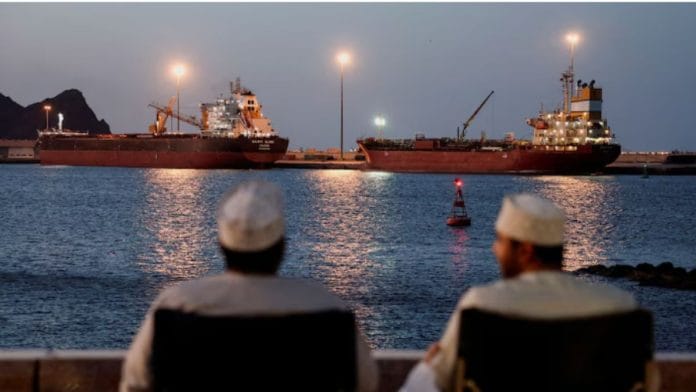
Saudi Arabia has on its East-West pipeline (Petroline) to bypass Hormuz, transporting oil to the Red Sea. The UAE has relied on the Fujairah port pipeline to maintain exports. Iraq is increasingly looking northward, reviving routes from Kirkuk through Ceyhan in Turkey. There are also reports of vessels avoiding the Iranian channels in the Strait of Hormuz by hugging the Omani coastline.
Jordan and Syria—once considered too unstable for large-scale infrastructure—are re-emerging as potential transit hubs. Emirati investments in the port of Aqaba in Jordan and the redevelopment of Latakia in Syria speak of a new strategic intent. The Basra–Aqaba pipeline, capable of transporting up to 1.5 million barrels per day, has gained renewed urgency, offering Iraq a viable alternative to Gulf routes and dependency on Kirkuk-Ceyhan with Turkey, that have political sticking points over Kurds.
Syria, despite its internal fragmentation, is smartly positioning itself as a transit economy. Agreements to expand Latakia’s capacity and Al-Sharaa’s repeated utterances to integrate it with regional pipelines show he is working on leveraging Syria’s geographical strengths.
Even more unmissable is Iraq’s recent move to resume overland exports through Syria, sending crude to the Mediterranean via Baniyas.
These changes aren’t merely tactical solutions but blocs in building a larger resilience grid that the GCC will now pursue as a strategic necessity.
Amid this reconfiguration, an interesting point emerges.
While political normalisation between Israel and key Gulf states remains incomplete, Israel today sits on one of the most strategically relevant infrastructures in the region: the Eilat-Ashkelon pipeline.
Built decades ago, this pipeline connects the Red Sea to the Mediterranean, effectively creating a land bridge between Asian and European energy markets. With a capacity exceeding a million barrels per day and significant storage capabilities, it offers a ready-to-use alternative to maritime chokepoints.
The logic is compelling to say the least. Oil transported via Saudi Arabia’s East-West pipeline to the Red Sea could be moved to Eilat, pumped through Israel, and shipped onward to Europe.
Under usual circumstances, such a configuration would be politically fraught, if not impossible, because not everything is hunky-dory between Israel and the GCC (other than the UAE).
The scale of disruption in Hormuz is forcing a reconsideration of previously unviable alignments. While full normalisation may remain elusive, functional cooperation—driven by economic necessity—becomes harder to dismiss— perhaps to Abraham Accords 2.0
Additionally, if IMEC 2.0 is to take shape, Europe’s ports and routes will also demand a rethink.
Ports such as Trieste in Italy and Thessaloniki in Greece are likely to gain more prominence as entry points into the European market than the China-dominated Piraeus.
These hubs, already integrated into Europe’s continental logistics networks, can serve as anchors for diversified trade flows coming from the Gulf via the Mediterranean Sea.
As one of the world’s largest energy importers, India has repeatedly proven to be acutely exposed to disruptions in the Gulf.
While the Indo-Pacific remains a key strategic domain of India’s foreign policy endeavours, India’s broader strategic posture and stakes in the Indo-Mediterranean have significantly evolved. Investments in Israel, deepening ties with the UAE and Saudi Arabia, and growing partnerships with Greece, Cyprus, and Italy, all point to India’s expanding Indo-Mediterranean footprint.
India must leverage its multi-alignment and position itself as a stakeholder in the broader development of networks. This means engaging with multiple partners across the GCC and Levant, supporting infrastructure development across regions, and leveraging its diplomatic capital to bridge competing interests and trust deficit between Israel and other GCC countries.
It also means navigating a more contested strategic space. The Indo-Mediterranean is likely to become a theatre of competition—economic, political and perhaps even military—maybe before the Indo-Pacific turns to hot-war.
(Edited by Saptak Datta)

