



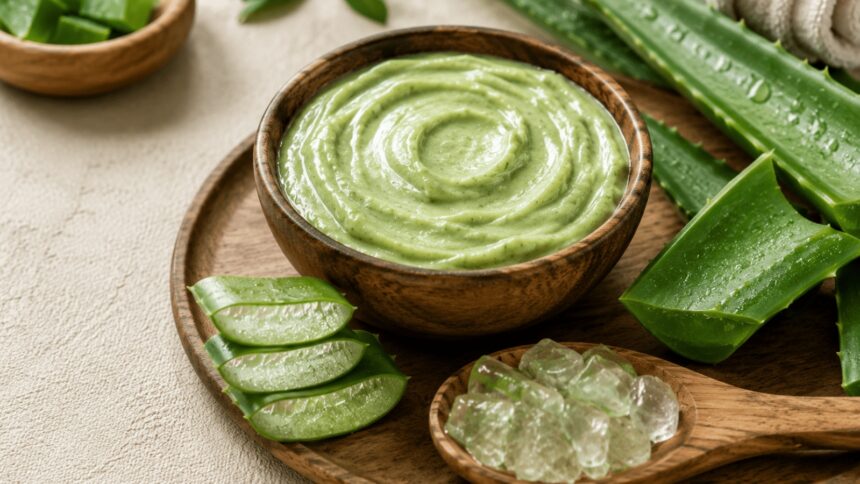
While aloe vera has always been a staple in skincare, social media wellness trends have further cemented its royal status. With aloe-based tutorials, reels, and flashy advertisements flooding feeds every day, it is safe to say that the succulent enjoys an unthreatened position in the beauty rituals of millions. One such user took to Quora, a popular online forum, to share her doubts about whether aloe vera can bring lasting changes to her skin tone and texture. The post reads: ” I apply aloe vera daily, it cleans and brightens the face, but after like 4 hours, it all disappears and my skin becomes normal. Will it really do any permanent work on my fairness and texture?” We decided to get this query answered and reached out to Dr Navjot Arora, a consultant dermatologist at Dermaheal Skin in New Delhi, for an expert-backed response.
Dr Arora explains that aloe vera provides a temporary brightening effect, mainly due to its hydrating and cooling properties. “When applied, it soothes the skin, reduces redness, and makes it look plump and refreshed,” he says, adding that this gives an instant glow or brightness. However, once the “moisture evaporates” and the skin returns to its normal state, it fades. “The gel doesn’t alter the skin’s natural pigment; it just enhances its appearance temporarily by improving hydration and smoothness.”
Aloe vera does not make the skin permanently fairer, the dermatologist clarifies. “It cannot change your natural skin tone or melanin production,” he notes. Nevertheless, it can help improve skin texture over time if used consistently — because it promotes “mild healing, reduces irritation, and supports .” The dermatologist further clarifies that although aloe vera’s enzymes and antioxidants can help make the skin feel softer and healthier, the results are more about nourishment and hydration than fairness.
“Realistically, aloe vera can soothe sunburns, calm irritation, reduce mild acne inflammation, and hydrate dry skin,” Dr Arora notes. He further adds that the antibacterial and anti-inflammatory properties make it a good addition for sensitive or irritated skin. “However, claims like aloe vera removing tan instantly, whitening the skin, or reversing ageing are myths. It’s beneficial as a gentle skincare aid, not as a miracle treatment.”
For long-term skin brightness and better texture, Dr Arora recommends ingredients like Vitamin C, niacinamide, hyaluronic acid, and glycolic acid, which are more effective. “Professional treatments such as chemical peels, hydrafacials, and laser toning can also help improve dullness and uneven skin tone.” Along with these, he also stresses on maintaining a good skincare routine which includes sunscreen, cleansing, and moisturizing. “Aloe vera can be used alongside these ingredients as a calming and hydrating support,” he tells indianexpress.com
“Yes, overusing raw aloe vera can cause irritation in some people,” Dr Arora confirms. According to the dermatologist, the raw gel may contain compounds like aloin, which can trigger “allergic reactions or rashes”, especially in sensitive skin. Thus, it is always advisable to do a patch test before applying it to the face.
The safest option, as per him, is to use dermatologically tested aloe vera gel products rather than raw gel. “Apply a thin layer on clean skin and leave it for 10–15 minutes before rinsing, or use it as a light overnight moisturizer.” the dermatologist notes. He further cautions that one should always avoid mixing it with harsh ingredients or leaving raw gel on the skin for long hours.

