



Tata Sons 108th Annual General Meeting was adjourned for the first time in the company’s history due to a lack of quorum resulting from a regulatory restriction on one of its two key shareholders.
The quorum issue stems from regulatory restrictions on Sir Ratan Tata Trusts (SRTT), one of Tata Sons’ two key shareholders.
Under the Tata Sons Articles of Association, the presence of a representative nominated jointly by SRTT and Sir Dorabji Tata Trusts (SDTT) is necessary for an AGM quorum.
In May, the Maharashtra Charity Commissioner barred SRTT from holding meetings.
The AGM was called on Tuesday afternoon to finalise FY26 accounts, declare a dividend and reappoint N Chandrasekaran as a director retiring by rotation.
violation charge
The Charity Commissioner’s action followed complaints filed by advocate Katyayani Agrawal alleging violations of the Maharashtra Public Trust Act (MPTA). A second complaint was filed by Venu Srinivasan, a Trustee of Tata Trusts.
The Act limits the number of trustees holding office for life to one fourth of the Trust’s total board strength and complainants argue that SRTT violates this clause.
The Trust denied the charges and sought relief from the Charity Commissioner to allow it to hold meetings.
The Tata Sons board will decide the new date for the AGM and that could be linked with the outcome of the Charity Commissioner’s probe into the functioning of SRTT, one of the two key shareholders of Tata Sons. Sir Dorabji Tata Trust (SDTT) is the other key shareholder.
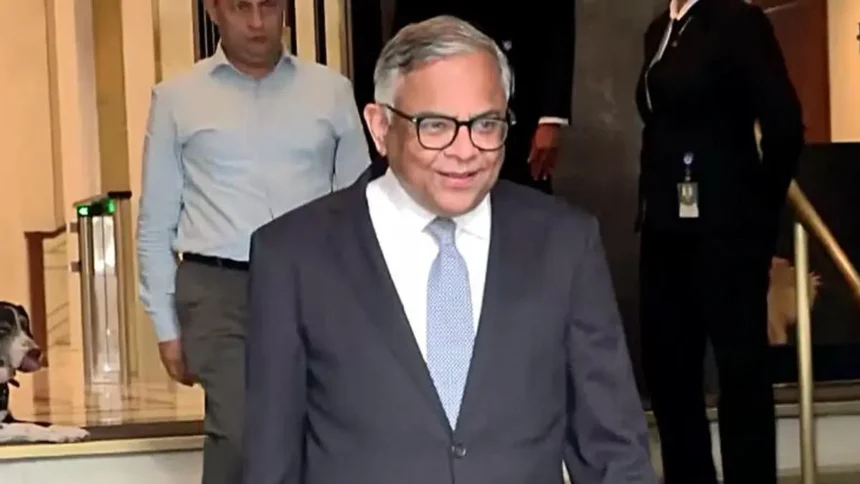
Chandra and board members Saurabh Agrawal and Anita George joined the AGM in person at Bombay House, Tata Group’s headquarters in South Mumbai. Other board members joined virtually including Tata Trusts Chairman Noel Tata, who attended as an individual shareholder. and Mehli Mistry, who is the executor of Ratan Tata’s will.
Under the Companies Act, an AGM needs to be held within 15 months of the last such meeting and within six months of the close of the financial year, that is, by September-end.
“Tata Sons can approach the Registrar of Companies for a three-month extension beyond the end of September if it does not get relief from the Charity Commissioner. If the deadlock persists beyond December, one of its shareholders can seek National Company Law Tribunal directions under Section 97 of the Companies Act. While Section 97 provides for action against companies that default in holding AGMs, the provision can be relied upon given the extraordinary circumstances,” said Harsh Kumar, founding partner of Kaizen Law.
Bombay House, the Tata Group headquarters building, in Mumbai
| Photo Credit: DHIRAJ SINGH
Published on August 18, 2026