



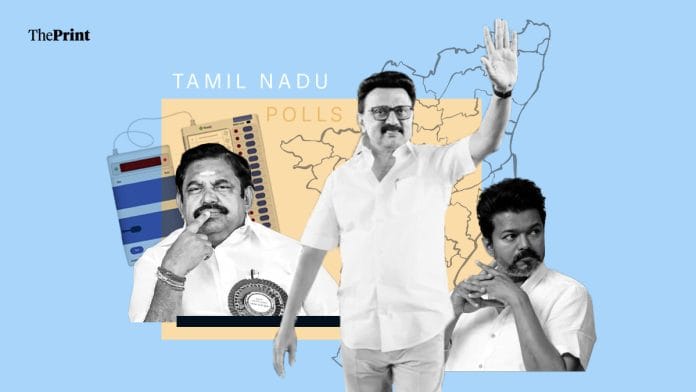
This coexistence defines the present moment, and it shapes how elections are fought. Tamil Nadu is not moving beyond ideology; it is becoming a political system in which welfare delivery is continuous, with ideology activated when required.
Dravidian politics began explicitly as an ideological project. Under EV Ramasamy, famously known as, it directly challenged the caste hierarchy, Brahminical dominance, and cultural hegemony. This ideological clarity carried into early electoral politics with the establishment of the and later by the (established by Anna Durai). Under the leadership of Periyar and, the demand for a separate Dravida Nadu represented a radical rethinking of sovereignty. But after the Sino-Indian War, the Dravidian movement its goals towards federal autonomy.
After 1967, when DMK came into, the Dravidian movement started becoming institutionalised. Welfare, reservations and state-led redistribution embedded the movement’s goals into governance itself.
Over time, this produced an unusual outcome—ideological convergence without political agreement. Both the dominant parties, DMK and the All-India Anna Dravida Munnetra Kazhagam (AIADMK), accepted the same foundational model: welfare expansion, importance to Tamil identity, social justice and state intervention. In the current election cycle, this consensus has deepened.
The DMK’s has disbursed Rs 5,000 (combined payment of Rs 1,000 monthly rights grant for February, advance payments of Rs 2,000 for March and April and special summer assistance of Rs 2,000) into the bank accounts of 1.31 crore women and also promised large-scale income support through welfare schemes.
The AIADMK went a step further. They promised the extension of. New player Vijay has also included many such promises in his TVK’s (Tamilaga Vetri Kazhagam) manifesto, and the BJP (Bharatiya Janata Party) also wants to expand its presence through welfare-linked beneficiary outreach. No major party is arguing against redistribution. They are competing over who can deliver it better.
This convergence reshapes political competition itself. The AIADMK’s of the ruling government focuses on governance issues such as law and order, women‘s safety, corruption and dynastic politics rather than offering a distinct ideological alternative.
The BJP introduces a different ideological vocabulary rooted in nationalism and Hindutva, seeking to unsettle the Dravidian consensus. Yet in practice, its politics in Tamil Nadu is limited by the state’s entrenched welfare consensus, forcing the party to foreground delivery, benefits and governance performance alongside its ideological messaging. As a result, the BJP is not restructuring the political discourse; it is being drawn into an already established welfare-centric framework.
The entry of TVK further reflects this shift, while positioning the DMK as its primary political rival, the party has not foregrounded a sharply differentiated ideological critique; instead, it is emphasising governance, corruption and delivery.
Similarly, Seeman’s NTK (Naam Tamilar Katch) attempts to sustain a strongly articulated ideological politics centred on Tamil nationalism. However, its electoral performance suggests that while ideology remains present in the system, it no longer structures mass voter alignment, operating instead through limited mobilisation and vote splitting. The result is a system where political conflict is structured less by ideological disagreement and more by competing claims of performance. In this context, ideology has not disappeared; it has become strategic.
It is invoked during Centre-state conflicts, debates over language and identity and in moments of political confrontation, but it does not structure everyday political competition. Instead, governance performance, like delivery, efficiency, and scale, forms the continuous baseline of politics.
These trends are not entirely new. What makes the present moment distinct is its convergence with structural disruption. The 2026 election is unfolding in a more fragmented and unpredictable political field because the traditional DMK-AIADMK binary now faces challenges from emerging actors such as TVK and Seeman’s, which was recognised as a state party by securing over 8 per cent of the vote in the 2024 parliamentary election.
TVK and NTK may not dominate the election, but they are highly disruptive, capable of splitting votes and shaping outcomes in closely contested constituencies. Unlike earlier moments, such as Vijayakanth’s DMDK’s entry in 2006, this is not a single outsider challenge. It is a multi-nodal disruption interacting with an already stabilised welfare consensus.
At the same time, leadership structures have weakened within the AIADMK, the principal opposition party. In the absence of a unifying figure like J Jayalalithaa, the party has struggled to retain its earlier coherence, with authority now more fragmented under Edappadi K Palaniswami. This leadership vacuum has had wider electoral consequences.
Voter loyalties, particularly in urban and peri-urban constituencies, are becoming more fluid, and traditional caste-based vote-bank calculations are. Even parties historically rooted in caste mobilisation, such as the Pattali Makkal Katchi (), have faced internal realignments and shifting influence, reflecting the weakening of stable social coalitions.
Campaign styles reflect this transition. Traditional cadre-based mobilisation continues to matter, especially for parties like the DMK, but it is now supplemented by, celebrity-driven appeals and narrative-based campaigning. The result is a political system marked by greater fragmentation, less predictable voter alignment, more competitive welfare politics and diffused leadership authority.
This raises a deeper question about how politics itself is changing. When structural inequalities are addressed primarily through administrative mechanisms, their political character can become less visible. Redistribution becomes a question of delivery; inequality becomes a problem of targeting. The risk is not the erosion of welfare, but the narrowing of political debate. At the same time, this may reflect the success of the Dravidian project itself; its core principles have become so embedded in governance that they no longer require constant ideological articulation.
In short, Tamil Nadu has not moved beyond ideology. But it no longer relies on it in the same old way. What has emerged is a new political grammar in which welfare is continuous, ideology is episodic, competition is technocratic, and mobilisation is increasingly hybrid and fragmented. In this system, ideology does not disappear. It waits to be deployed when the political moment demands it.
(Edited by Saptak Datta)

