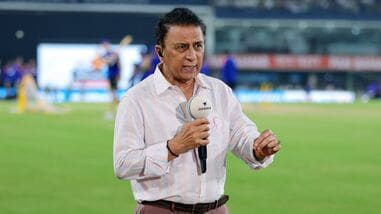
Former Indian captain Sunil Gavaskar believes the inclusion of the Plate teams in the Ranji Trophy has lowered the level of the competition. The Ranji Trophy started in 1934-25 with the teams grouped geographically into four or five zones, until the format change post 2001-02 season.
From the 2002–03 season onwards, the BCCI replaced the zonal system by a two-tiered league stage comprising the Elite (higher tier) and Plate Groups (lower tier). In the ongoing , there are four Elite Groups – A, B, C and D – comprising of eight teams each.
The Plate Group consists of six teams, where the top two teams qualify for the Plate Final. The winner of the Plate Final then earns a promotion to the Elite Group in the following season. felt the records set in the Plate Group shouldn’t be viewed on the same footing as in Elite Groups.
“Even in the Ranji Trophy, in the Plate Division, there are records being broken and new marks set at both batting and bowling. When the Lodha panel recommended that all states and Union Territories should be included in the , it just meant that the standard got lowered,” Gavaskar wrote in his column for Mid-Day.
Arunachal Pradesh, Manipur, Meghalaya, Mizoram, Nagaland and Sikkim are in the Plate Group of the Ranji Trophy 2026-27. The 77-year-old highlighted the lack of infrastructure in most of the Plate teams and also called the hiring of out-of-the-station players.
Rajasthan’s Manendra Singh and Mumbai’s Chinmay Sutar are the guest players who will turn out for Mizoram in 2026-27. Earlier Mumbai’s Iqbal Abdullah (played for Sikkim in 2019–20) and Karnataka’s Stuart Binny (played for Nagaland in 2019–20) are some of the prominent examples of players who played for Plate teams.
“Most of the new state teams did not even have proper infrastructure and so hired players from other states who couldn’t find a place in their home state teams,” explained Gavaskar, India’s 1983 World Cup winner.
“These players were good but unable to break through into their home state teams, and so went to the state teams in the Plate Division. When most, if not all, played against teams from the Elite division, they were found wanting, and it just exposed the yawning gap in the standard between the divisions. Yet the records set are still called records because they are playing in the ,” Gavaskar added.
Meanwhile, Arunachal Pradesh have forfeited their Ranji Trophy Plate Group opener against Nagaland, which was scheduled to begin on Sunday in Ahmedabad, amid an administrative crisis in the state cricket association stemming from a dispute between two warring factions and a case pending before the Itanagar bench of the Gauhati High Court.
The forfeiture comes after Arunachal Pradesh failed to field their Under-19 team for a Vinoo Mankad Trophy match against Sikkim in Bhubaneswar on Thursday, with the ongoing dispute leaving the association without a functioning authority to take decisions on team selection.
The association held its elections in September, with Nabam Vivek elected as president. However, multiple district associations subsequently approached the Gauhati High Court, alleging irregularities in the polls.
The High Court has reserved its order in the matter, preventing the BCCI from intervening and constituting an independent selection panel, as it did in the case of Bihar.