



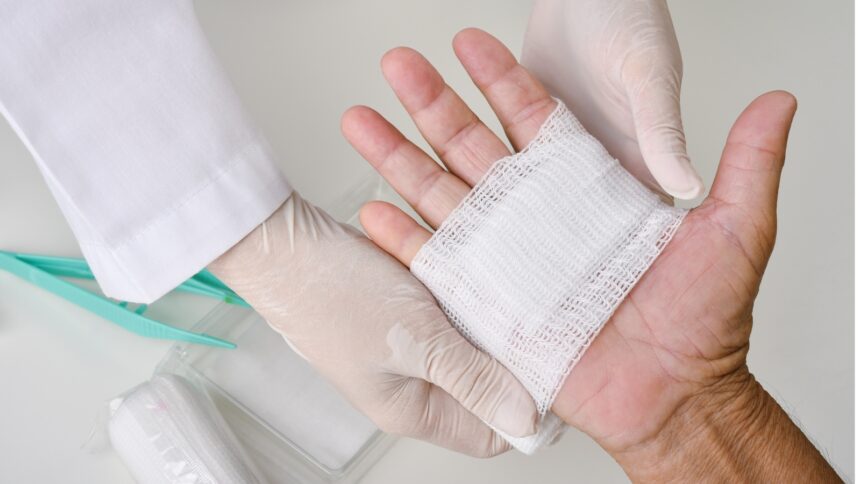
Biomedical engineers at Brown University have developed a smart wound dressing that can sense the presence of harmful bacteria and respond by releasing antibiotics only when they are actually needed, according to a study published in the journal Science Advances.
Researchers say the technology could help doctors treat infections more quickly while also reducing the unnecessary use of antibiotics, which has become a growing concern for global health.
This is important because the overuse of antibiotics is one of the main reasons antibiotic resistance has become a growing problem. When antibiotics are used too often or incorrectly, bacteria can adapt and become resistant to the drugs.
The newly developed bandage is designed to do far more than simply cover a wound. It can actively monitor the wound and detect early signs of infection. Most importantly, the hydrogel responds to beta-lactamase enzymes produced by harmful bacteria. When these enzymes are detected, the hydrogel breaks down and releases antibiotics directly into the wound, targeting the infection at the right moment rather than releasing medication continuously.
In tests conducted on mice, a single application of the hydrogel eliminated bacterial infection in an abrasion wound. It also outperformed a widely used antimicrobial dressing in both clearing bacteria and promoting faster wound healing.
“We’ve developed a material that releases antibiotics only when harmful bacteria are present, so it limits exposure to antibiotics when they’re not needed but still provides these important medications when they are needed,” said Anita Shukla, professor in Brown’s School of Engineering.
At present, identifying the type of bacteria causing an infection usually requires laboratory testing. Doctors typically collect samples and wait for results before deciding on a course of treatment, a process that can take valuable time, particularly when the infection is serious.
The team has patented the material and is continuing to develop it for possible future commercialisation. However, researchers believe the smart wound dressing represents a promising step towards smarter and more targeted wound care.
As antibiotic resistance continues to rise, the development highlights how even a simple medical product like a bandage could play a role in addressing one of the world’s most pressing health challenges.
(This article has been curated by Paramita Datta, who is an intern with The Indian Express)

