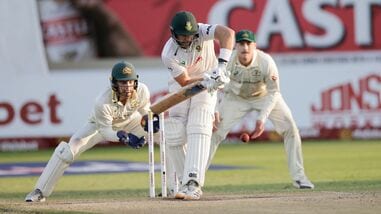
South Africa face a daunting fourth-innings challenge against Australia in the first Test at Kingsmead in Durban, with the Proteas needing 319 more runs on the final day to win a match that the visitors have dominated. With Australia setting a target of 421, the contest also brings the highest successful run chase in Test cricket into focus.
The record belongs to the, who chased down 418 against Australia at the Antigua Recreation Ground in St John’s in May 2003. The hosts reached 418/7 to secure a three-wicket victory, completing the biggest successful fourth-innings chase in the history of the format.
must overcome Australia’s attack and the pressure of chasing a substantial total in the final innings of the first Test.
At stumps on Day 4, South Africa were 102/4 in their second innings, with Aiden Markram unbeaten on 45 and Wiaan Mulder on five. David Bedingham had made 46 before falling to Josh Hazlewood, while Ryan Rickelton, captain Temba Bavuma and Tristan Stubbs were also dismissed.
Australia earlier declared their second innings at 314/6, having built on a first-innings total of 390. South Africa had responded with 284 in their first innings, leaving Australia with a lead substantial enough to set the hosts a target of 421.
Matt Renshaw was central to Australia’s position, following his first-innings 190 with 82 in the second innings. Captain Pat Cummins also provided a late contribution, scoring 32 off 12 deliveries as Australia accelerated towards a declaration.
The 2003 Antigua Test remains the benchmark for fourth-innings run chases. and the West Indies had both scored 240 in their first innings before the visitors posted 417 in their second, powered by Matthew Hayden’s 177 and Justin Langer’s 111.
Chasing 418, the West Indies received important contributions from captain Brian Lara, who scored 60, before Ramnaresh Sarwan and Shivnarine Chanderpaul registered centuries.
Sarwan made 105, while Chanderpaul scored 104. Their batting kept the hosts in contention before lower-order contributions from Omari Banks and Vasbert Drakes helped complete the chase. Banks remained unbeaten on 47 as the West Indies reached the target with three wickets remaining.
The result remains the highest successful run chase in men’s Test cricket, ahead of South Africa’s own 414/4 against Australia in Perth in December 2008. That victory, achieved with six wickets remaining, is the second-highest successful chase in Test history.
South Africa, therefore, has a place in the record books already, but their 2026 task is different: they need to recover from four lost wickets and produce a sustained batting effort against an Australian attack that has put them under pressure throughout the final innings.
Markram and Mulder will resume the chase on the final day, with South Africa requiring 319 runs and Australia needing six wickets to secure victory.