



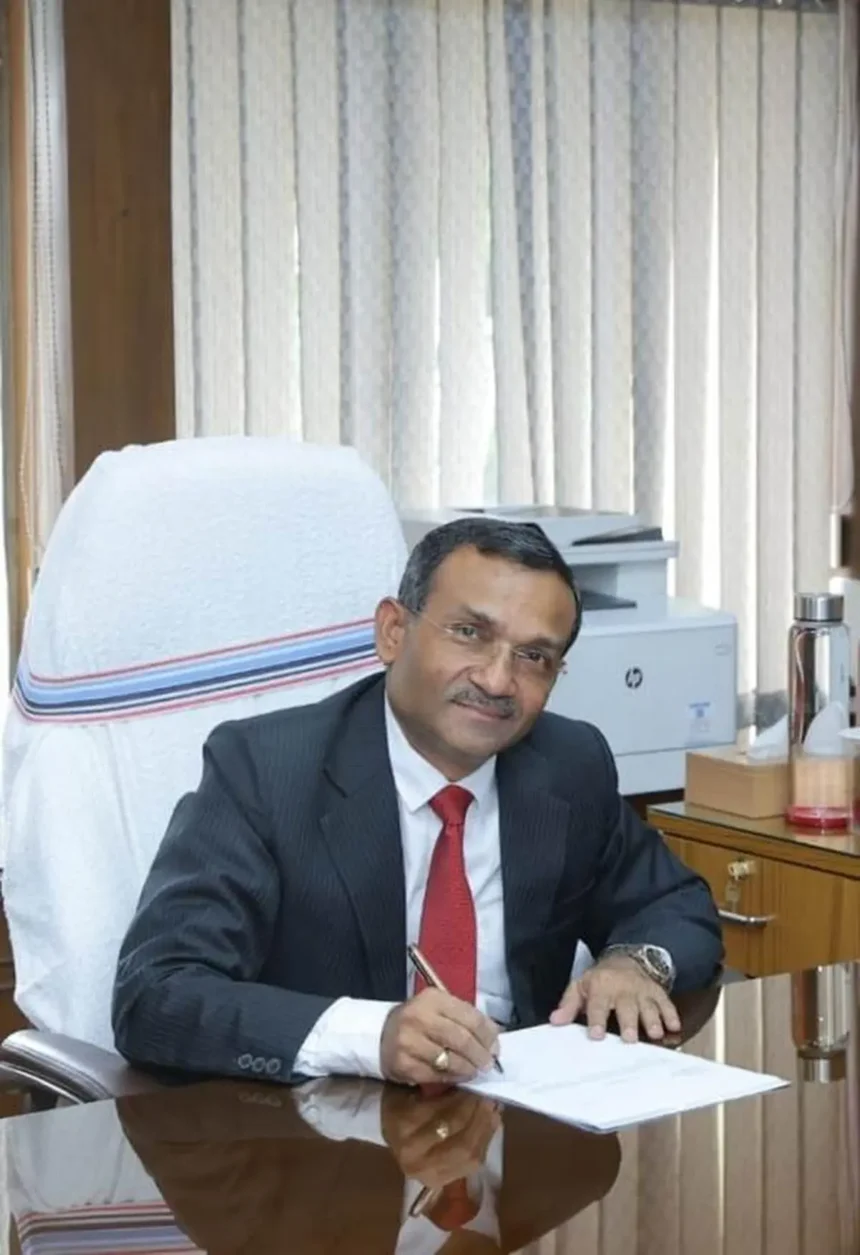
Hindustan Copper Limited, India’s only vertically integrated copper producing company, expects productions of copper ore and metal in concentrate to increase by around 28 per cent and 17 per cent year-on-year, respectively, this fiscal, says its Chairman & Managing Director Anupam Misra.
In an interview with businessline, Misra says work is under progress as far as formation of a joint-venture with CODELCO, its Chilean strategic partner, is concerned after four copper blocks have been shortlisted in Chile. The transaction advisor is expected to submit its report on the total reserves in these four blocks to Hindustan Copper in the next two-three months.
Edited excerpts:
Hindustan Copper Limited’s revenue from operations grew 81 per cent year-on-year during Q1FY27. What were the factors that contributed to this growth?
Three factors contributed to the revenue growth. Copper ore production increased by almost 14 per cent year-on-year during the quarter. The quality of ore also increased during the period with metal-in-ore or metal-in-concentrate rising by 16 per cent. Sales of metal in concentrate grew 21 per cent. LME Copper price increased to around $13,300/MT from around $12,800/MT in the year-ago period. So, all these factors culminated into the 81 per cent growth in the revenue for the first quarter. With cost remaining almost flat during the period, net profit grew around 163 per cent y-o-y. Total cost remained almost flat as a very small percentage of it is fuel cost for us. Moreover, there is some solar or renewable component within the power mix. So, in terms of fuel, there is not much impact on our cost front due to the West Asia crisis.
What are the production targets for this financial year? And how is the company planning to grow the productions?
In the last financial year we produced around 3.67 million tonnes of copper ore and 27,400 tonnes of metal in concentrate. In this financial year, ore production is expected to be around 4.7 million metric tonnes. And, for metal, production is expected to grow to around 32,000 tonnes in FY27. We have several mines. In the Khetri Copper Complex (KCC) in Rajasthan, we have two mines — Khetri and Kolihan. Because of an accident earlier, the production was disturbed in Kolihan mines. Now it has come up in full swing. So, production will increase from here on.
Malanjkhand mine in Madhya Pradesh contributes almost 75 per cent to our revenue from operations. Its production will definitely grow by 10 per cent. At the Indian Copper Complex (ICC) Ghatsila in Jharkhand, we have three mines — Surda, Kendadih and Rakha. By 2024-end, we had reopened Surda mine and started operations. Production is working well there. Kendadih mine has also started working. And, by the end of December this year, we should be having some operations from Rakha mine, which is being re-opened.
How is Hindustan Copper’s tie up with CODELCO going on? How far have you progressed on the four blocks in Chile’s copper belt for acquisition?
Yes, four blocks have been shortlisted in Chile and further work is to be done. A joint venture company with CODELCO has to be created first to take it to the next level. So, work is under progress as far as formation of the JV is concerned, because multiple stakeholders of the two countries will be involved. Therefore, some legal structure has to be created properly. So, our transaction advisors are working on it. As a large investment is required in this project, other interested Indian PSUs may join hands with us. It would depend on their investment appetites and risk diversifications among each other.
What could be the total reserves in these four blocks? Are these mature blocks?
Certain things are at the study stage at present. The transaction advisor is expected to submit its report to Hindustan Copper in the next two-three months. If any one of them is a mature block, it may take six to eight years to start production. It is kind of adding the resource and reserve to our kitty for the country’s mineral security.
The government has notified the Mines and Minerals (Development and Regulation) Amendment Act, 2026. What are your views on this act?
India’s mineral resources are fundamental to our national security, energy security and industrial growth. The MMDR Amendment Act, 2026 is therefore an important step towards creating a more predictable, uniform and rational fiscal framework for the mining sector. A stable and competitive tax regime is essential to ensure the viability of domestic mining, reduce import dependence and strengthen the competitiveness of Indian industry. This amendment will lower compliance burden, support small and medium miners, strengthen domestic mineral supply, bolster investor confidence and improve mineral security.
The benefits become even more significant in the case of critical and strategic minerals, where assured domestic supply is integral to India’s long-term economic and strategic interests. Rationalisation and greater uniformity in the cumulative burden of royalties, auction premiums, DMF, GST, transit fees and other levies can improve the viability of mines, encourage investment in technology and infrastructure, and support sustainable employment in mining-dependent regions. Ultimately, a stronger and more competitive domestic mineral sector will contribute to reducing costs across the economy and advancing India’s journey towards a more self-reliant and Viksit Bharat.
Published on September 21, 2026