Morbi’s ceramic industry is back to the fuel-switching game. While larger players like Varmora Granito have returned 80 per cent of its plants to propane as supplies recover from the disruption triggered by the Iran war in March, others like Kajaria Ceramics have flagged fresh price increases and limited visibility on any future dip in fuel costs.
“Currently, 80 per cent of our plants are operating on propane, which is now available and the price is affordable,” Bhavesh Varmora, Chairman and Managing Director of Varmora Granito told businessline. The company can switch between propane and natural gas, depending on availability and relative costs. “If propane prices rise, we will switch to LNG from Gujarat Gas. Both the gases are available as of now,” he said.
Varmora’s approach reflects the changing fuel economics confronting manufacturers in Morbi, one of India’s principal ceramic tile production hubs. Propane supplies to the cluster dried up in March after the Iran war disrupted energy supply chains linked to the Gulf and shipping through the Strait of Hormuz. With limited alternatives, manufacturers were forced to suspend production as fuel stocks dwindled. Production in Morbi shut on March 5 and remained largely suspended until April 15 exposing the vulnerability of a cluster dependent on uninterrupted fuel supplies for kiln operations.
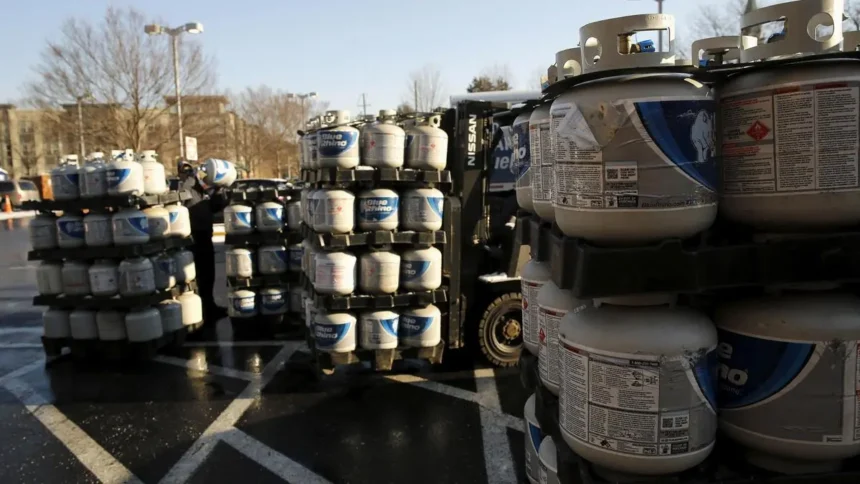
With propane now available again, manufacturers are reassessing their fuel mix. Varmora said propane was priced at around ₹92 per standard cubic metre (SCM), against approximately ₹85 per SCM for natural gas supplied by Gujarat Gas. However, propane has a higher calorific value of around 11,110, compared with 8,300-8,400 for natural gas, allowing manufacturers to generate equivalent heat using a lower volume of fuel. Its effective cost therefore depends on consumption and operating efficiency.
Ceramic players in Morbi source propane from Indian Oil Corporation, Bharat Petroleum Corporation and Aegis. The price equation, however, remains fluid. The management of Kajaria Ceramics told investors earlier this week that propane prices had increased twice in the preceding 15 days, including a rise of ₹12.5 per SCM over two to three days. Natural gas prices fell by ₹5.5 per SCM over the same period, narrowing the price gap between the two fuels.
Propane remained around 5 per cent cheaper than natural gas on the comparison cited by Kajaria, but the company expects prices to rise further over the following 15 days. “The gas situation will be tough going forward. Spot prices have gone up significantly in the international market,” Kajaria management said, adding that there was no visibility on gas prices declining.
Natural gas prices in Morbi have risen from around ₹50 per SCM on February 28 to approximately ₹85. The escalation has prompted manufacturers to raise tile prices to offset higher production costs. Kajaria said price increases in Morbi were around 18-19 per cent across product categories, while broader increases across the cluster have been estimated at 30-40 per cent.
The impact has been more contained at Kajaria’s plants in the North and South, where gas is relatively cheaper. The company raised prices by 12-13 per cent across product categories at these facilities. In the second quarter, gas prices averaged around ₹70 per SCM, with rates at ₹70.56 in the North, ₹63 in the South and ₹75 in the West. The Western region has greater exposure to propane and is also feeling the impact of its price increases.
Kajaria operates three plants in Morbi, three in the North and two in the South. Its Northern facilities source gas from Delhi, while its Southern plants procure supplies from two city gas distribution companies, including Syngas. The company is expanding its North and South facilities, where lower fuel costs offer a relative advantage. During the first quarter, it had reported that gas prices in Morbi had risen from around ₹48 to ₹86-88 per SCM, compared with an increase of approximately 10-12 per cent in the North.
Production constraints continue to weigh on the cluster. Of Morbi’s 500-odd manufacturing units, an estimated 40-50 per cent are currently not operational, according to sources cited by Kajaria management.
Published on November 1, 2026