United Breweries (UBL) reported a 24 per cent year-on-year rise in net sales to ₹2,536 crore and a 190 per cent increase in profit after tax (PAT) to about ₹135 crore in Q2 FY27, driven by 16 per cent volume growth, premiumisation and improved operating margins. Premium beer volumes grew 38 per cent. EBITDA margin expanded 480 basis points to 11.9 per cent, while EBIT margin rose 441 basis points to 8.4 per cent.
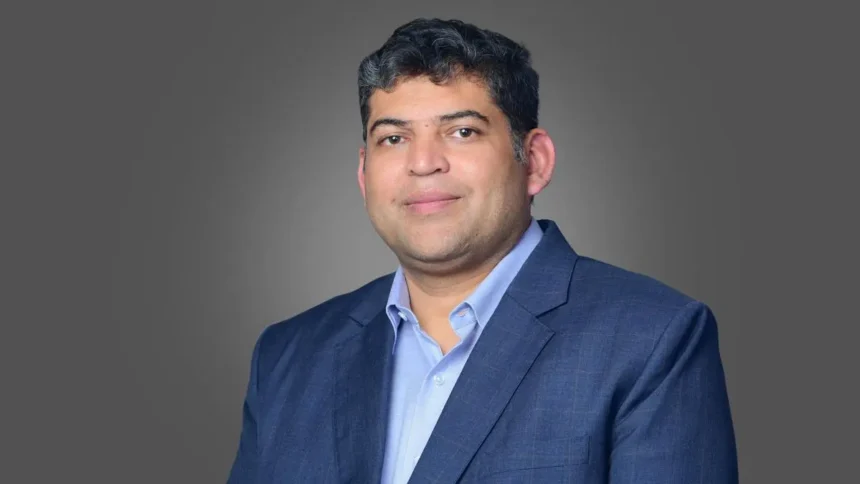
Vivek Gupta, MD & CEO, UBL, discusses the impact of geopolitical tensions on costs and packaging supplies, the role of State policies in expanding the beer market, investments in local production, and how premiumisation is driving growth and margin recovery.
Edited excerpts:
What were some key highlights during this period?
This quarter has been very solid. The beer category in India is at a tipping point. We have a healthy price mix and State mix. We also expanded gross margins by almost 200 bps despite facing severe cost pressures from the West Asia conflict due to a ₹300-350 crore impact. Our programmes on premiumisation are focused on investing more in States that are more understanding of the cost structure.
Policy reforms matter in this category. The policy change in Karnataka and Maharashtra, and better availability of beer in Jharkhand and Assam, have led to this level of category growth.
There was an impact of weather last year because of rains. But when we isolate the results, 70 to 80 percent are on the back of solid policy interventions and our execution of the premiumisation strategy.
Could you walk us through the key drivers of margin expansion?
Structural margin recovery initiatives and disciplined revenue management delivered a 194 bps improvement in gross margin. Margins expanded because we have taken pricing in some States to recover the cost. In Tamil Nadu, Andhra, and Telangana, pricing is super critical because we are on the borderline of losses if it doesn’t work out.
This is also because of the premium mix, the State mix, and also our work on return bottles. We have been working in a chain of systems where we can get the return bottles recycled and leverage them. We have improved our return bottle percentages over the last six months, which is also reflected in the gross margins.
Which States are you currently collaborating with to drive category expansion?
We have been working closely with all Indian States. We are investing in a new brewery in Uttar Pradesh, which will be operational in September next year. We are investing in a can line in Maharashtra and Telangana. Policy interventions in Maharashtra and Karnataka are the right direction, especially since beer is entirely locally produced.
We are now working closely with the new Tamil Nadu government for a fair policy on beer. But there is work to be done in States like Telangana, which has overdue payments to the manufacturers. Amid a global economic crisis, it is difficult for manufacturers to continue investing in the business and drive category growth with significant overdues.
A few States have not recognised the cost impact because of the conflict yet. States such as Tamil Nadu, Andhra Pradesh, and Telangana cannot expect manufacturers to absorb the steep cost increases to grow the beer category. We still have to work on making the category and industry more sustainable in these States. There’s also work to be done in large markets like West Bengal and in Madhya Pradesh.
Have you been able to mitigate some of the impact of the war in West Asia?
We are unable to mitigate all of it. Oil prices have been fluctuating. Recently, sugar and rice prices went up. We are not getting any respite from commodity pricing. We still see a risk to the amount we talked about in our full-year plans.
However, our productivity plans are accelerating. We have reduced investments where we were not making money. We have increased growth in our premium mix. In the previous quarter, our premium business grew almost 7 per cent. This time it’s 38 per cent. It will grow manifold, and so we will continuously invest in the premium brands.
We are excited about the success of Heineken Silver, which is growing at 67 per cent. This gives us confidence that we can further drive a margin profile for our premium brands, as it is better than our mainstream brands. But commodity cost pressure exists, even at a macro level. Increasing inflation is also having an impact.
But we are here for the good times. Coming into the festival season, our job will be to make our brands available to the consumer.
Could you talk about the impact of the war on packaging, particularly the availability of glass bottles and aluminium cans?
We have worked diligently on the supply chain for the last three years and have expanded our supplier base. We can leverage a global Heineken scale with some suppliers, but more work needs to be done.
Beer is local. We source almost 98 per cent of our ingredients locally. India needs more malting units, canning units, and packaging units. It is a multi-year category creation game. I would not get excited by one quarter of profits or top line. This quarter tells us that we are going in the right direction. Premiumisation plus the right brands can drive significant category growth.
This gives a framework and model not only to us, but to other global companies who want to participate in India — that India has real potential for beer. It just needs more manufacturers to come together and create an ecosystem of beer.
How is premiumisation contributing to margin expansion?
Two years back, we were almost 1,000 bps behind on a premium margin because we were transferring premium products from one state to another. In the last few years, we have localised premium production of our Ultra and Ultra Max in our breweries.
We have invested capital to produce it locally. We also looked at other cost and pricing opportunities. Today, the premium portfolio is margin accretive to our mainstream portfolio, which gives us incentive to further accelerate premiumisation.
Because of localisation of production, our Kingfisher Ultra business has grown 47 per cent. The Heineken brand is produced locally in the Karnataka breweries, which is why Heineken Silver is up 67 per cent.
What is the production capacity of the new brewery in Uttar Pradesh? How will it help meet demand?
We will produce our Heineken brand there. This brewery will help us locally produce Heineken with the best quality and serve more consumers. Beer is a very local business and has a lot of high logistics costs for transferring it. That would be a key game changer and accelerate further premiumisation and growth.
How are Tier 2 and Tier 3 markets contributing to your growth compared with metros?
One USP of Kingfisher is that we are in every single corner of India. Beer only has 1,00,000 stores. We must ensure that our brand is present in every nook and corner, including smaller towns and tourist locations; our growth is quite broad-based.
In Tier 2 and Tier 3 towns, the big opportunity is the availability of cold beer and cold infrastructure. Having more coolers in smaller towns in India is part of our three-year plan.
Published on October 28, 2026