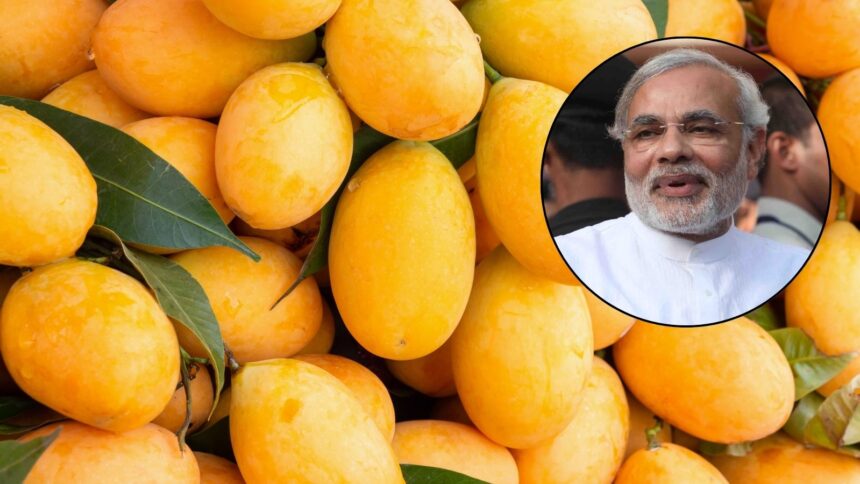
Few fruits evoke as much affection and regional pride in India as the mango. From bustling city markets to family dining tables, conversations about mangoes become almost inevitable during summer. In the latest edition of Mann Ki Baat, Prime Minister Narendra Modi reflected on this shared enthusiasm and highlighted the remarkable diversity of mango varieties found across the country.
Speaking about the fruit’s cultural significance in Hindi, he said, “As soon as summer comes, another discussion starts in every house. And that is mango. Mango is the subject of discussion. There isn’t a house in India where mango is not discussed in summer.” He went on to celebrate the grown in different regions, noting, “Every area has its own mango, its own taste, its own fragrance. Maharashtra and Konkan’s Hapus, Alphonso, and Gujarat’s Kesar. This is the life of Amritsar. Uttar Pradesh’s Dasheri and my Kashi’s Langda.”
DISCLAIMER:
The Prime Minister also drew attention to the distinct qualities associated with specific varieties. “By the way, Langda is a special variety of mango. Even after cooking, its colour sometimes remains green. Bihar’s Jardalu, whose fragrance can be recognised from a distance. Chausa, Malda, people’s habits are associated with every name.” Moving southward, he added, “If you go to South India, then Banganpally, Totapuri, Neelam, Malgoa, Bengal’s Imsagar, Odisha and Andhra Pradesh’s golden line, that is, the place changes. The form, colour, and taste of mango also change.”
Beyond taste and tradition, Modi also highlighted the economic significance of mango cultivation. He said, “And friends, this journey of mango is now reaching the global market from the village. Today, through Mann Ki Baat, I will praise my farmer brothers and sisters associated with the production of mangoes. You are not a common farmer for the country’s agricultural economy; you are very special. Keep spreading like this.”
His remarks offer an opportunity to look at how India’s mango-growing regions developed their signature varieties, what makes each cultivar unique, and how mango farming has evolved. Alok Singh, expert on food history and science at Diga Organics, helps us understand the significance of this summer fruit.
A combination of genetics, climate, soil composition, rainfall patterns and cultivation practices shapes the characteristics of a mango.
Singh notes, “Coastal varieties such as Alphonso from Maharashtra develop their signature sweetness, aroma and saffron-coloured flesh due to lateritic soils, sea breeze influence and warm days followed by cooler nights. Kesar thrives in the semi-arid conditions of Gujarat, which help concentrate sugars and aromatic compounds. Eastern varieties such as Himsagar benefit from the humid climate and fertile alluvial soils of West Bengal, contributing to their juicy, fibreless texture. Similarly, Banganapalli from Andhra Pradesh develops its firm flesh and balanced sweetness under hot, dry conditions. These unique agro-climatic combinations create regional flavour profiles that are difficult to replicate elsewhere.”
Many of India’s iconic mangoes have evolved alongside local farming communities over generations, creating a strong connection between the fruit and its place of origin. Traditional cultivation methods, region-specific grafting techniques and local knowledge have helped preserve these varieties.
Singh states that consumer preferences also play a significant role. “For example, Alphonso is celebrated for its aroma and export appeal, while Langda and Dasheri are deeply embedded in the food culture of North India. Regional festivals, local markets and geographical indication recognition further strengthen these associations. As a result, certain mangoes become cultural symbols of their respective states rather than simply agricultural products.”
A complex combination of production, supply and market factors influences mango pricing. Varieties with lower yields, higher cultivation costs and greater susceptibility to weather fluctuations tend to be more expensive.
According to Singh, transportation and post-harvest handling also contribute significantly, particularly for fruits that require careful packaging to prevent damage. “Export demand can further increase prices by creating competition between domestic and international markets. Premium varieties such as command higher prices because of their limited growing regions, relatively short harvest window, distinctive sensory qualities and strong brand recognition among consumers. In many cases, consumers are paying not just for the fruit but also for its reputation and consistency.”
Most mango varieties are nutritionally beneficial and provide vitamin C, vitamin A precursors, potassium and a range of antioxidants. However, Singh stresses that there are meaningful differences between varieties.
“Deep yellow and orange-fleshed mangoes such as Alphonso and Kesar generally contain higher levels of carotenoids, which support eye and immune health. Varieties with relatively higher fibre content may offer greater digestive benefits and can contribute to better satiety. From a blood sugar perspective, portion size is often more important than the specific variety, as all . Consumers should focus on moderation, pair mangoes with a source of protein or healthy fat when possible, and choose whole fruit over juices. Nutritionally, the healthiest mango is often the one that is naturally ripened, fresh and consumed as part of a balanced diet rather than judged solely on sweetness or flavour,” concludes the expert.
DISCLAIMER: