



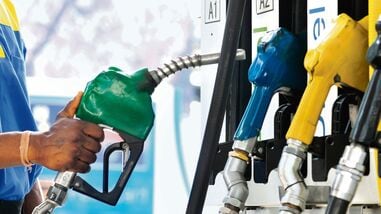
Petrol and diesel prices today, September 24: Petrol and diesel prices remained unchanged across major Indian cities on Thursday, September 24, after state-run oil marketing companies (OMCs) maintained retail rates following their daily 6 am revision.
Petrol in Delhi continued to cost ₹102.12 per litre, while diesel was priced at ₹95.20 per litre. In Mumbai, petrol remained at ₹111.21 per litre and diesel at ₹97.83 per litre. Fuel rates in the two cities have largely remained stable in recent days.
OMCs revise petrol and diesel prices every day at 6 am, with retail rates influenced by factors including international crude oil prices, the rupee-dollar exchange rate, taxes and local market conditions.
Despite volatility in global crude markets, domestic petrol and diesel prices have remained relatively stable in several major cities in recent days. On September 23, for instance, Mumbai’s petrol price remained unchanged at ₹111.21 per litre.
Global oil markets remained volatile amid developments surrounding the US-Iran conflict and diplomatic efforts to ease tensions.
Brent crude futures settled at $103.08 a barrel on September 23, rising $3.83, or 3.86%, while West Texas Intermediate (WTI) futures gained $1.64, or 1.81%, to settle at $92.16 a barrel, according to Reuters.
The latest move came after several sessions of declines as traders assessed the possibility of increased oil supplies and developments around US-Iran diplomacy.
Oil markets are closely watching developments between Washington and Tehran because any disruption around the Strait of Hormuz could affect global crude supplies.
Iran has indicated that it could reopen the strategically important Strait of Hormuz within a week if the US reduces military pressure and lifts its blockade on Iranian ports, according to a senior Iranian official cited by Reuters. The proposal was conveyed to Washington through mediators.
US President Donald Trump has also said that talks between the US and Iran were continuing and expressed optimism that a settlement could eventually be reached. However, significant differences between the two sides remain.
The Strait of Hormuz is a key route for global energy shipments, making developments around the waterway an important factor for crude prices and, consequently, fuel markets.