



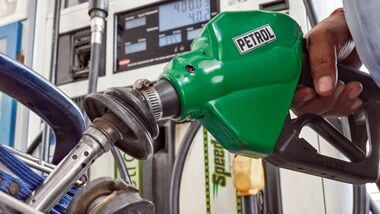
Petrol and diesel prices today, October 7: State-run oil companies kept petrol and diesel prices unchanged after their daily revision at 6:00 AM on Wednesday, October 7, despite the US-Iran war pushing up global crude oil and fuel costs.
Indian refiners are feeling the impact of these global supply disruptions.
While state-run OMC retailers have maintained a freeze on prices, India’s largest private fuel retailer hiked petrol prices by ₹5 per litre and diesel by ₹3 per litre on Saturday.
Nayara Energy was also the first in the country to pass on the burden of surging international oil prices to consumers after energy supplies were disrupted by the outbreak of the US-Iran war in late February.
OMCs had delayed passing on these costs until May. At that time, retail prices for petrol and diesel were increased through a series of staggered revisions, resulting in a cumulative hike of approximately ₹7.50 per litre for both fuels by the end of May.
Across major metros, fuel rates have held their ground since June.
In Mumbai, the retail price of petrol stood at ₹111.21 per litre, remaining unchanged from the previous day. Over the past few days, the fuel rate in the financial capital has seen minimal movement, fluctuating marginally between ₹111.18 and ₹111.21.
Oil prices rose on Wednesday as the market weighed supply constraints from a storm heading for US oil-producing regions and attacks by Yemen’s Iran-backed Houthis on Saudi Arabia against increased supplies of Middle East crude.
Brent futures rose 93 cents, or 0.92%, to $101.51 a barrel by 0022 GMT. US West Texas Intermediate (WTI) crude rose 82 cents, or 0.92%, to $90.25.
US forecasters said on Tuesday a storm forming in the Gulf of Mexico would become the first Atlantic hurricane of 2026 within two days and would likely hit oil and gas producing facilities.
The offshore areas in the Gulf in the storm’s path produce 15% of US crude oil and 5% of the country’s natural gas.
Meanwhile, Iran has increased the pace of attacks on tankers in the Strait of Hormuz in recent days, just as oil shipments through the world’s most important energy chokepoint approach prewar levels.
UK Maritime Trade Operations has reported nine attacks in the waterway already this month, half the total number it reported for all of September in the Strait of Hormuz and Persian Gulf combined. Last month’s figure was boosted by four assaults in the final two days, underscoring the recent acceleration.
In an interview with Reuters, US Vice President JD Vance said that Iran must make a “meaningful” reduction in its nuclear enrichment capacity to satisfy US demands and end the countries’ seven-month war, even as Washington was unsure how Tehran makes decisions in negotiations.
Vance, a longtime skeptic of US involvement in foreign wars, has taken a leading role in negotiating a settlement to the conflict and brokered a provisional peace agreement in June that quickly fell apart.
“If you don’t want a nuclear weapon, then why do you need 60% enriched fuel? And if you want to show commitment to not building a nuclear weapon, don’t build highly enriched fuel. That’s a very basic threshold issue,” Vance said.
“I think if they want to show a commitment to not building a nuclear weapon, they would do something meaningful on their enrichment capacity.”
(With agency inputs)