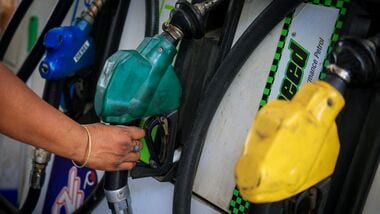
Petrol and diesel prices today, November 29: Petrol and diesel prices have remained largely steady across major cities despite a surge in global crude oil costs due to the US-Iran war, which led to the closure of the Strait of Hormuz.
Union Petroleum and Natural Gas Minister Hardeep Singh Puri attributed this to the Centre’s strategy of cutting excise duties and managing domestic fuel supplies.
Here is a look at the petrol and diesel prices in major metropolitan cities as of November 29:
New Delhi: Petrol is retailing at ₹102.12 per litre, while diesel is priced at ₹95.20 per litre. The national capital continues to have relatively lower fuel prices compared to other metros.
Mumbai: In the financial capital, petrol is priced at ₹111.21 per litre, and diesel costs ₹97.83 per litre.
Chennai: Residents in Chennai are paying ₹107.76 per litre for petrol and ₹99.55 per litre for diesel.
Kolkata: Petrol costs ₹113.51 per litre, while diesel costs ₹99.82 per litre.
Bengaluru: Petrol is priced at ₹110.44 per litre, and diesel at ₹99.56 per litre.
Hyderabad: Petrol costs ₹116.15 per litre, while diesel costs ₹104.23 per litre.
It’s the latest sharp move in oil markets, roiled by disruptions to Middle Eastern supplies and Ukrainian attacks on Russian processing plants. Together, the two wars have driven up the cost of living around the world, prompting a wave of interest-rate hikes that has helped derail the bull market in equities.
In recent weeks, though, oil product flows have picked up through the Strait of Hormuz, adding crucial extra barrels to the market. Refineries elsewhere have been running at breakneck speed to fill the supply gap. All the while, demand has cratered, with the International Energy Agency seeing consumption falling almost 3 million barrels a day this year.
Further emergency stockpile releases from IEA member countries are also taking some of the heat out of fuel markets, with European nations set to release at least 15 million barrels of diesel between early November and the end of February, according to the Paris-based watchdog.
Those factors have combined to ease cost pressures that sparked protests in France and Italy and contributed to heavy losses for the Republicans in the US midterm elections.
A Bloomberg Economics model shows that a $20 drop in crude oil prices could reduce the US Consumer Price Index by roughly that amount. In recent months, however, central bankers have focused on another gauge of inflationary pressures: crack spreads.
Those gauges, which measure the difference between crude and fuel prices, have been stubbornly wide for much of this year. In the last few weeks, they’ve reversed, with European gasoline trading at its smallest premium to crude since 2023. Across the US and Asia, equivalent premiums of gasoline and diesel are at multimonth lows.