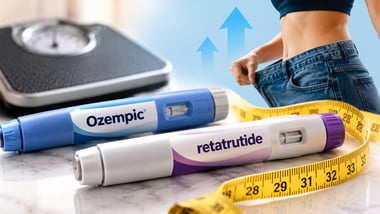
Eli Lilly said on Wednesday its experimental next-generation obesity drug, retatrutide, outperformed Novo Nordisk’s Ozempic on blood sugar control and delivered more than double the weight loss in a diabetes study.
Retatrutide is widely expected to fuel Lilly’s next wave of growth following the success of its Zepbound and Mounjaro.
In previous studies, the drug has already shown a bariatric-surgery level of weight loss in patients with obesity, likely positioning it to be the most powerful drug in the booming market.
Commonly nicknamed “triple-G”, the once-weekly retatrutide activates GLP-1, GIP and glucagon hormone receptors.
Triple-G drugs are expected to deliver greater weight loss than earlier generations by combining appetite suppression, blood sugar control and increased calorie burning.
The head-to-head trial compared 9 mg and 12 mg doses of retatrutide with a 2 mg dose of Novo’s diabetes drug Ozempic.
Lilly said the trial used the 2 mg dose as a comparator since it is the highest approved dose available.
Both doses of retatrutide lowered A1C, a measure of blood sugar over time, by an average of 2.2 percent compared with Ozempic’s 1.8 percent at 80 weeks in the late-stage trial.
Those taking the higher dose of retatrutide lost 20.9 percent of their weight compared with 9.4 percent on Ozempic.
“Overall, the data reaffirms retatrutide’s differentiated efficacy across weight and glycemic control, strengthening its position as a key long-term cardiometabolic growth driver,” said Citi analyst Geoffrey Meacham.
Retatrutide also delivered greater improvements than Ozempic across certain cardiovascular risk factors.
Head-to-head trials compare a potential new medicine directly with a treatment already in use, giving patients and physicians evidence that reflects the choices they face every day, Lilly explained in a statement.
In TRANSCEND-T2D-2 (compared retatrutide with injectable Ozempic 2 mg because it is the highest approved dose), both doses of retatrutide delivered greater A1C reduction and more than double the weight loss of Ozempic 2 mg at 80 weeks.
“Participants taking retatrutide lowered their A1C by an average of 2.2% compared to 1.8% with Ozempic and lost an average of 44.3 lbs
(19.5%; 9 mg) and 47.4 lbs (20.9%; 12 mg) compared to 20.9 lbs (9.4%) with Ozempic,” Lilly said.
The most common adverse events with retatrutide were gastrointestinal-related. Treatment discontinuation rates due to adverse events were 4.8% (9 mg) and 7.9% (12 mg) with retatrutide, compared to 2.7% with Ozempic, Lilly said.
In TRANSCEND-T2D-2, people taking the highest dose of retatrutide lost an average of 47.4 lbs (20.9%), more than double the weight loss seen with Ozempic, along with greater A1C reduction.
In TRIUMPH-2, people with type 2 diabetes and obesity taking the highest dose lost an average of 49.6 lbs (20.8%).
Weight loss has historically been more difficult for people living with type 2 diabetes, and Lilly believes that, “if approved, retatrutide could shift how the disease is treated.”
No. Retatrutide is an investigational molecule that has not been approved by FDA or any regulatory organisation anywhere in the world. Anyone purporting to sell retatrutide to consumers is breaking the law.
Ozempic should not be judged solely on weight loss, said Ambre James-Brown, head of Novo’s global media, noting that the highest doses of the diabetes drug have also shown benefits for heart, kidney and liver health.
In another key late-stage study, Lilly is testing retatrutide against tirzepatide, the active ingredient in Zepbound, among adults with obesity with or without type 2 diabetes.
“Lilly is also comparing retatrutide head-to-head with tirzepatide in TRIUMPH-5, an ongoing Phase 3 trial in adults with obesity with or without type 2 diabetes,” the company said in a statement.
Lilly plans to seek approval for retatrutide in the US next year. It will present detailed results from the study at a future medical meeting.