



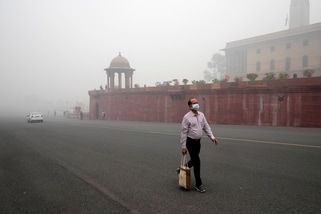
The Commission for Air Quality Management () has tightened Delhi-NCR’s Graded Response Action Plan (), bringing some restrictions into force at an earlier stage and removing exemptions for certain vehicles.
Among the key changes, restrictions on inter-city and inter-state buses below BS-VI, CNG or electric vehicles, as well as diesel generator sets, will now apply from Stage I of GRAP, instead of Stage II.
The revised framework also changes rules for commercial vehicles carrying essential goods and expands public advisories under the citizen charters issued for each GRAP stage, reported.
The latest changes mark the fifth modification to GRAP since 2022, with a greater focus on vehicular emissions and dust-control measures.
Under the earlier GRAP framework, restrictions on certain inter-state buses entering Delhi came into effect at Stage II.
The revised rules bring these restrictions forward to Stage I and expand their geographical coverage.
During Stage I, inter-city and inter-state buses from Haryana, Uttar Pradesh, Rajasthan and the adjoining states of Punjab, Himachal Pradesh, Madhya Pradesh, Uttarakhand and Jammu and Kashmir will not be allowed to ply in Delhi-NCR if they are not electric, CNG or BS-VI diesel vehicles.
The revised rule also removes the earlier exclusion for buses and tempo travellers operating under an All India Tourist Permit.
For commuters travelling into Delhi-NCR from neighbouring states, this could affect the availability of older buses once Stage I GRAP restrictions are imposed.
Restrictions on diesel generator sets have also been moved from Stage II to Stage I of GRAP.
The change brings generator use under the initial stage of the pollution-control framework, reflecting CAQM’s tighter approach to sources of emissions during periods of deteriorating air quality, the TOI reported.
The revised GRAP removes an earlier exemption for certain BS-IV goods vehicles carrying essential commodities during the more stringent stages.
Following a Supreme Court order, BS-IV goods vehicles carrying essential commodities will no longer receive the earlier exemption under Stages III and IV.
This includes light goods vehicles and medium goods vehicles under Stage III and trucks or high goods vehicles under Stage IV.
The revised framework also specifically addresses restrictions during Stage III on diesel-operated BS-IV and below-standard light and medium goods vehicles registered outside Delhi entering the capital.
CAQM has expanded the geographical scope of restrictions on certain older passenger vehicles.
SD Attri, member technical, CAQM, said restrictions under Stage III on BS-III petrol and BS-IV diesel or below-standard light motor vehicles have now been extended to Sonipat.
The restrictions already applied to Delhi, Gurugram, Faridabad, Ghaziabad and Gautam Budh Nagar.
This means vehicle owners and commuters in the affected areas will need to keep track of the GRAP stage in force before travelling during periods of severe pollution.
The revised framework introduces a limited relaxation under Stage III.
While construction and demolition activities remain restricted, pothole repair work will be allowed.
The change distinguishes essential road maintenance from broader construction and demolition activity during the more stringent pollution-control stage.
CAQM is also moving towards greater public visibility of pollution levels at construction and demolition sites.
SD Attri told TOI that construction and demolition sites measuring more than 500 square metres will be required to display PM10 and PM2.5 levels.
Attri said, “We have decided to make it mandatory for construction and demolition sites measuring over 500 square metres to display PM10 and PM2.5 levels. Currently, only the state pollution control board can check these levels, but we want the public to be able to see the concentrations as well. We will issue an order soon to implement this.”
CAQM has also amended its 2021 directions concerning the monitoring of dust-control measures at construction and demolition sites across NCR.
The revised GRAP contains 48 action points, covering measures to be implemented across the different stages of the pollution-control plan.
CAQM has also expanded the citizen charters associated with each GRAP stage. These charters provide public-facing guidance on the measures and precautions applicable during different levels of air pollution.
For commuters, transport operators and businesses in Delhi-NCR, the key change is that several restrictions that previously came into effect at later GRAP stages will now be triggered earlier.
The revised rules therefore make it important for residents and businesses to track the GRAP stage declared by authorities, particularly during the winter pollution season.