



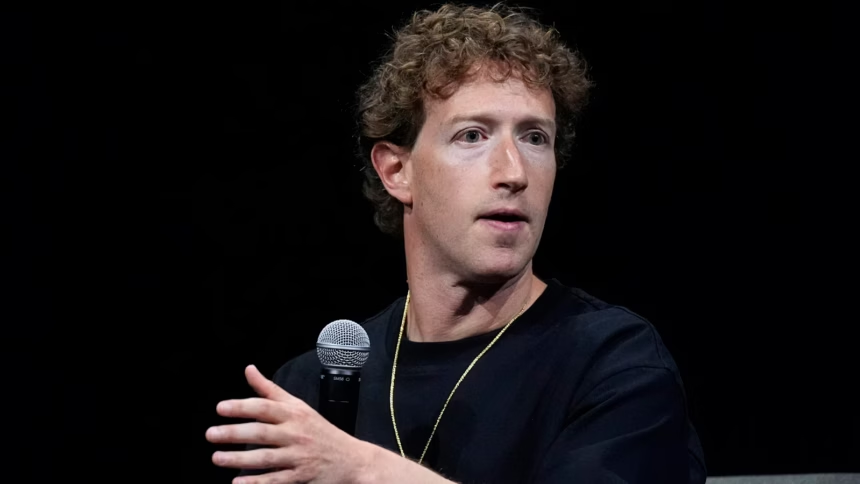
Even as Meta continues to accelerate its investments in artificial intelligence (AI), CEO Mark Zuckerberg has acknowledged that the social media giant has made mistakes in the AI transformation of its workforce. In an internal memo, Zuckerberg admitted that considering the complexity of these changes, the company has made mistakes and will most certainly make more.
In the memo accessed by Reuters, the CEO asserted that going forward the company will remain focused on providing as much stability as possible. The development comes at a time when Meta is investing hundreds of billions of dollars into AI with an aim to reshape the company’s approach to the technology. This is in line with the broader pattern seen among big tech companies that are pushing intensively towards AI research and development.
Back in May, Meta announced its sweeping job cuts impacting about 10 per cent of its global workforce and transferred about 7,000 of its staff to new projects related to AI workflows. Meta’s Head of People, Janelle Gale, explained that the company can operate with a flatter structure of smaller, agile teams that foster ownership. Gale had asserted that the company firmly believes that it will make its staff more productive and the work more fulfilling.
In the latest memo, the CEO enumerated the challenges faced by the company amid the boom in technology. Adopting a cautious tone, the CEO said, “I don’t want to overpromise because the world is changing in ways that are out of our control.” Earlier reports indicated that the company intended to conduct multiple rounds of layoffs throughout the year. However, the CEO allayed such fears, and reiterated that the Meta does not expect any more company-wide layoffs for the year. He went on to say that Meta will try to work around new roles for employees reassigned to train AI models.
“By creating important new roles for people, this also allowed us to shrink the size of teams knowing that if we make mistakes in some places, then we could transfer some people back,” Zuckerberg said.
The executive revealed that the social media giant has plans to ramp up its investments in team-building initiatives, which include allocating higher budgets for offsites and corporate events. The company is also organising a large-scale hackathon in July to promote cross-team partnerships and development on its latest models. Meanwhile, the CEO said that Meta has taken cognisance of the concerns of staff about widening manager oversight responsibilities, and it has plans to scale back.
In the last few months, large companies have been rapidly amplifying their investments in generative AI, automation tools, and related infrastructure while simultaneously cutting costs in other traditional areas of business. Meta’s move to lay off its staff has been seen by analysts as a wider trend in how companies are preparing for the AI-driven future. While these discussions fanned fears of job displacements, observers also suggested that while AI will eliminate certain managerial and administrative roles, it may also yield more opportunities, meaning it may transform jobs for many instead of replacing them entirely.
Despite the apprehensions, AI adoption seems inevitable, and workers seem to be increasingly leaning towards acquiring new skills to stay relevant in the ever-changing jobs landscape.

