



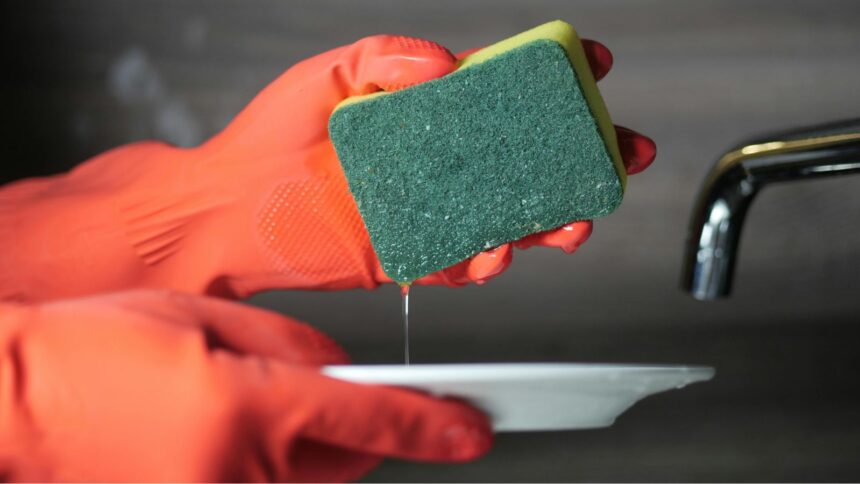
When people talk about microplastic pollution, they usually talk about plastic bags, bottles, and all sorts of plastic materials of daily use, like mugs or plastic cups. However, a new study has revealed that microplastic pollution can also be from a very common thing in your own kitchen – the kitchen sponge.
Researchers have discovered that ordinary kitchen sponges release microplastics during everyday dishwashing. The study published on Environmental Advances, titled ‘From sink to sea: Microplastic release from kitchen sponges and potential environmental effects,’ draws attention to how a simple household item used daily by millions of people around the world could be quietly contributing to environmental pollution, without most consumers ever being aware of it.
Microplastics are tiny plastic particles that generally measure less than 5 millimeters in length and are often not visible to the naked eye. They originate from either the breakdown of larger plastic materials or are manufactured as tiny particles to create bigger plastic products. These particles can enter the water system, soil, and even the food chain. Scientists around the world have been studying their impact because they have been found in oceans, rivers, drinking water, and even inside the human body.
The research published by the University of Bonn focused on kitchen sponges, which are commonly used for cleaning dishes, utensils, and kitchen surfaces.
Most of these sponges are made from synthetic materials such as polyurethane, a type of plastic. As the sponge is rubbed against plates, pans, and other surfaces during washing, tiny plastic particles can break away from the sponge material.
Laboratory experiments were conducted using an automated testing device called SpongeBot, which was designed to replicate the kind of mechanical stress and friction that sponges go through during everyday dishwashing.
Kitchen sponges release microplastics while in use. Sponges made with lower amounts of plastic were found to release significantly fewer microplastic particles compared to those with a higher plastic content. Nearly 0.68 grams to 4.21 grams of microplastics per person were released annually, the study said, depending on the sponge type.
Environmental experts have long warned about the growing problem of plastic pollution, and most discussions have focused on single-use plastic, shopping bags, plastic bottles, and other industrial waste.
The study shows that everyday household products can also play a key role in aggravating the problem. The study also found that not all sponges release the same amount of plastic. The researchers observed differences depending on the material and structure of the sponge. Some products shed significantly more particles than others.
India is among the countries grappling with challenges caused by plastic pollution, so understanding all possible sources of microplastics is needed for policymakers, manufacturers, and consumers to make better-informed decisions.
Experts say the findings should not cause alarm among consumers. Kitchen hygiene remains important, and sponges continue to serve a useful purpose in daily cleaning. The research is instead meant to raise greater awareness about how everyday products can quietly affect the environment around us.
The study also highlights the need for further investigation into the long-term impact of microplastics released through common household items, and calls for more responsible choices in how such products are designed and used.
(This article has been curated by Paramita Datta, who is an intern with The Indian Express)

