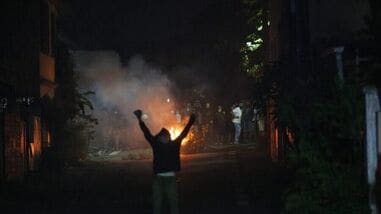
Mauritius has imposed an overnight curfew after protests over water shortages and the rising cost of living spiralled into violent clashes, in what has been described as the island nation’s worst unrest in decades.
The violence escalated after a woman was shot and wounded by police at a roadblock, although the circumstances of the incident remain unclear.
The police officer involved was arrested and remanded in custody, the BBC reported.
Prime Minister Navin ordered the curfew on Tuesday, warning that those responsible for the violence would face serious consequences. The unrest has disrupted daily life across the Indian Ocean island, known for its tourism and financial services sectors.
“Those who have carried out these actions will have to face the very heavy consequences warranted by their anti-patriotic acts,” said in an address to the nation, according to the BBC.
The demonstrations began about a week ago, with residents protesting water shortages and the rising cost of living. The situation deteriorated over the weekend as blocked roads and set tyres alight, as per reports.
Violence subsequently spread to public infrastructure and commercial establishments. Protesters reportedly used burning tyres, furniture and mattresses to blockade roads.
A police station in Rose Hill was set ablaze, while vehicles and businesses, including a McDonald’s outlet in Beau-Bassin, were vandalised or looted.
Authorities deployed the Special Mobile Force, a paramilitary unit, to support local police.
At least 10 people were arrested, while three police officers were injured during the clashes, according to reports.
The unrest also forced schools and public transport services to shut, while foreign embassies issued advisories urging their nationals to exercise caution.
The shooting of the woman at a roadblock emerged as a flashpoint in the protests. However, the circumstances surrounding the incident have not been fully established, and the officer’s arrest has not clarified the sequence of events.
Water shortages were among the initial triggers of the demonstrations. The government responded by increasing water supplies to households, but the protests escalated amid broader frustration over living costs and the police shooting, the BBC reported.
The scale of the unrest has raised concerns about public order in Mauritius, where disturbances of this magnitude have been rare in recent decades.
The current violence has drawn comparisons with the 1999 riots, which erupted following the death of Kaya, a popular Mauritian musician known for pioneering the seggae genre, while he was in police custody.
Kaya’s death triggered widespread anger and days of rioting, making the episode a defining moment in recent history. The latest unrest has revived comparisons with that period because of its scale and the concerns it raises about policing and public confidence.
Despite the overnight curfew, police reported further incidents and arrests. By Wednesday morning, however, traffic was moving across the island, and authorities urged residents to resume their normal activities, the BBC reported.
The government now faces the challenge of restoring order while addressing the concerns that triggered the protests, particularly water shortages and the cost of living.
The Cabinet was scheduled to meet on Wednesday afternoon to reassess the situation and determine the next steps, according to the BBC.